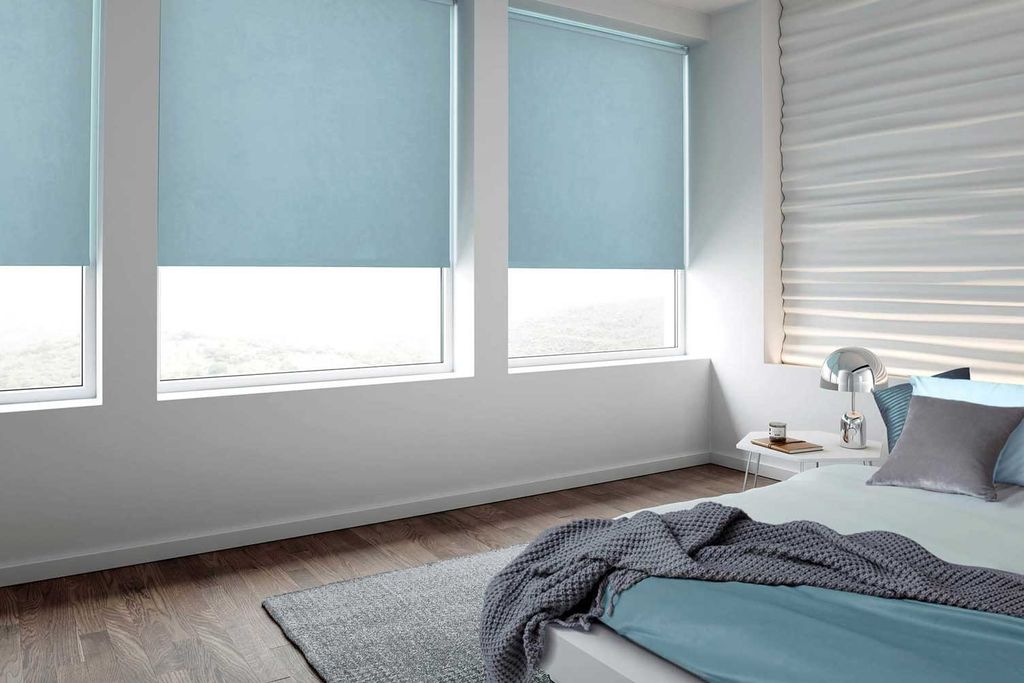
Roller blinds, made to measure in Dubai
A roller blind is one flat piece of fabric on a tube. There's no stack of slats and no gathered cloth — rolled up it's a bar at the head of the window, rolled down it's a clean plane across the glass.
That simplicity is what lets it fit where other blinds don't: inside a shallow reveal, behind a curtain, or on a window too small to be worth gathering fabric across. The cloth is flat, so it takes a wipe rather than a slat-by-slat going-over, which counts for something in a city where fine dust gets into everything.
Sunscreen or blackout
The same mechanism takes an open weave you can see through or a coated cloth that stops the light. The fabric does the work, not the roller.
Chain or motor
A side chain, or a tube motor run from a handset — worth it on glass you can't reach, and on a run of blinds you'd otherwise set one by one.
Free measuring visit
Someone measures the recess at the top, middle and bottom, because it's rarely the same all the way down, and brings the fabric range with them.
Inside the reveal, or in front of it
Every roller blind is one of two fits, and it's the first thing decided at the window.
A recess fit sits inside the reveal. It looks neat, it leaves the sill clear, and it needs a reveal deep enough to take the tube. Because the fabric is always cut a little narrower than the brackets, there's a line of light down each side — fine in a living room, not fine in a bedroom you want dark.
An exterior fit sits on the wall in front of the opening and overlaps the frame at the sides and the top. It covers the edges the recess fit can't, which is what you want over a bed, and it's the answer when the reveal is too shallow to hold the tube at all.
Both are measured the same way. The decision is about what the room is for.
Book a free measuring visit
Tell us your area and roughly how many windows, and we'll bring the fabric range to your home or office.
Fabric decides what the blind does
The mechanism is the same in every roller blind. The fabric is the whole decision.
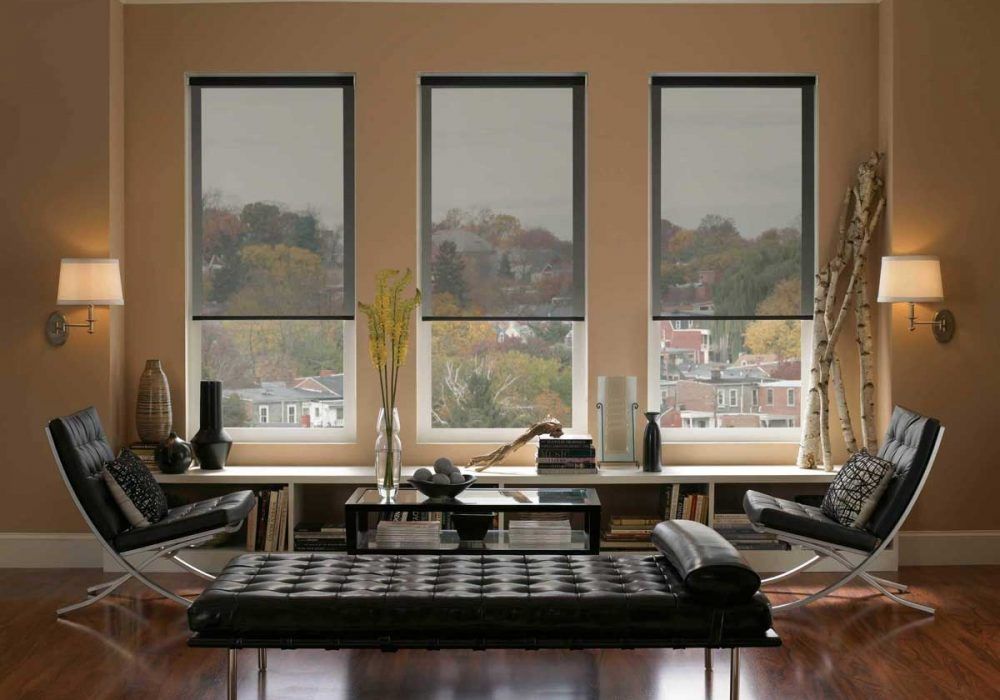
Sunscreen is an open weave. It knocks down glare and heat while keeping the view, which is why it ends up on west-facing living-room glass — you can still see out at four in the afternoon. The tighter the weave, the more glare it stops and the less you see through it.
Dimout is a solid cloth that takes the light right down without pretending to remove it. Blackout fabric is coated on the back and stops light passing through the cloth.
One thing worth saying plainly: blackout fabric on its own does not make a blackout room. The light comes in at the sides, in the gap between the fabric and the reveal, not through the cloth. Where a room genuinely has to be dark, that gap is closed with side channels, or the blind goes behind a curtain wide enough to overlap the frame.
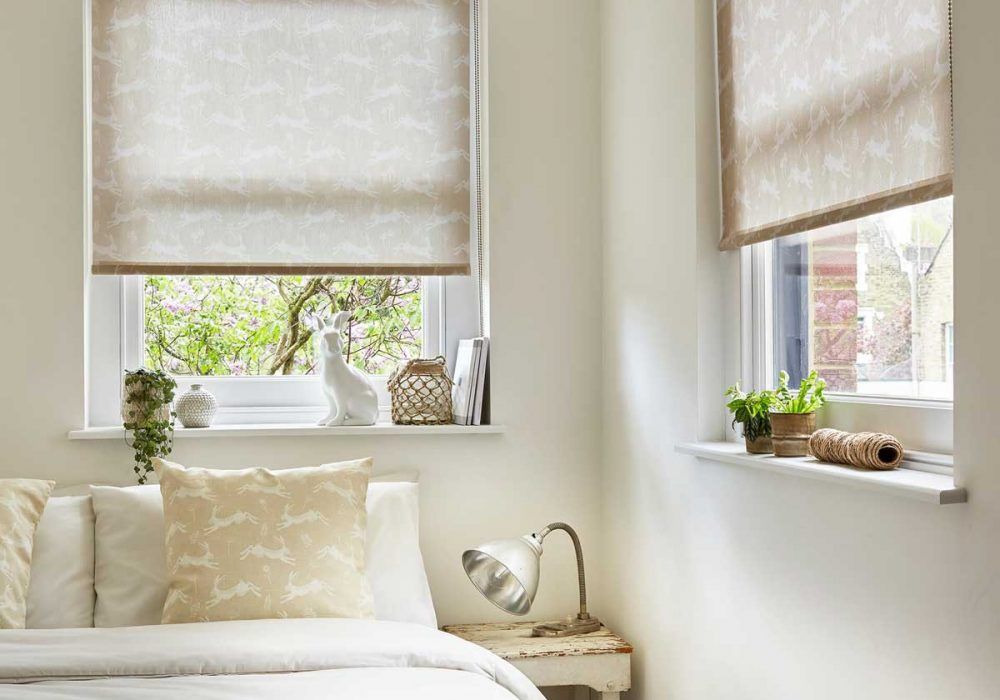
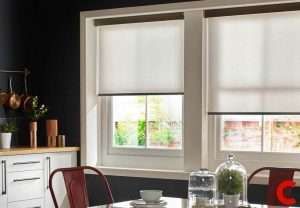
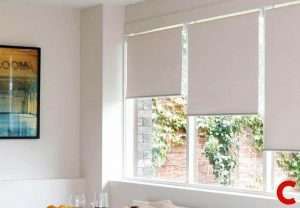
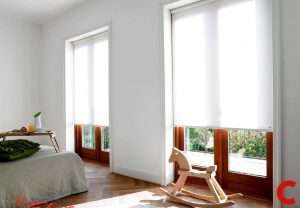
Roller blinds in use


What to settle before ordering
Five things change what gets made, and all of them are easier to answer at the window than over a phone:
- Recess fit or exterior fit — neat inside the reveal, or overlapping it to close the light gaps.
- Sunscreen, dimout or blackout, decided by what the room is used for rather than by the colour.
- Chain or motor. A motor is worth it on high glass, on a long row of blinds, and where a hanging chain would sit within a small child's reach.
- Which side the chain hangs, so it doesn't land behind a door or a wardrobe.
- Whether the fabric rolls off the front of the tube or the back. A back roll sits closer to the glass and hides the tube better; a front roll clears a handle or a deep sill.
Then there's the tube itself, left open or covered by a cassette. The cassette tidies the head of the window and keeps dust off the roll, which is the part of a roller blind nobody thinks to clean.
Get a quote for your windows
Call or WhatsApp us and we'll arrange a time to measure up and price the job before anything is cut.