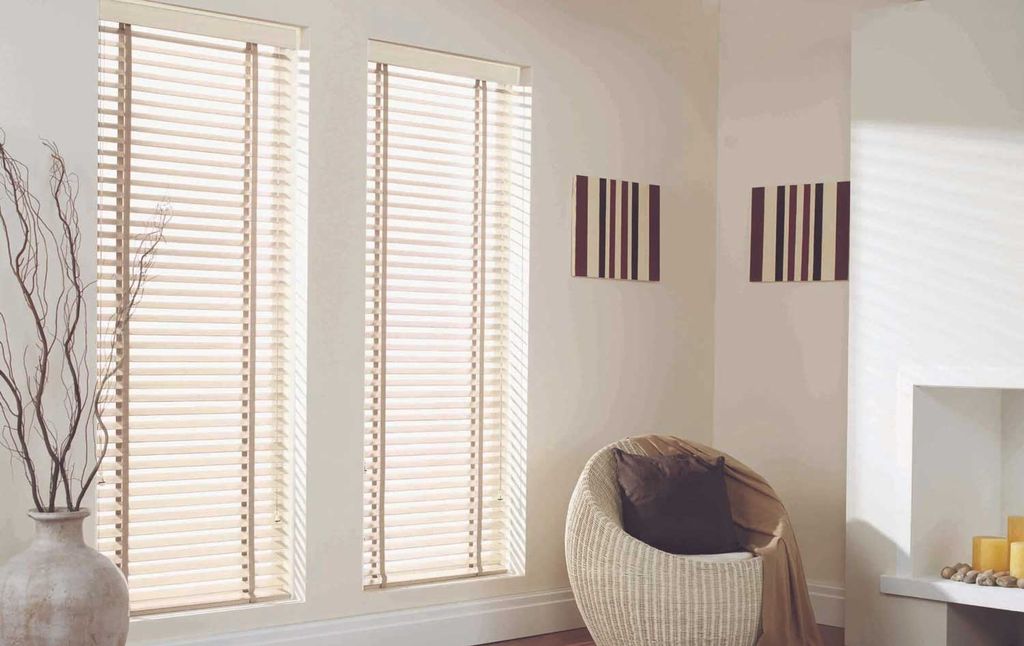
Venetian blinds, made to measure in Dubai
A venetian blind is a stack of horizontal slats hung on ladder tapes. You can lift the whole thing clear of the glass, or leave it down and tilt the slats — which is the thing no roller, roman or curtain does.
Closed, it covers the window. Tilted a few degrees, it throws daylight up at the ceiling and keeps the room bright while nobody sees in. Slats come in aluminium and in wood, with woven bamboo as the natural-material alternative, and the two behave differently enough that the choice tends to make itself once you say which room it's for.
Aluminium slats
Thin, light, and untroubled by heat or steam, which is why they end up in kitchens and bathrooms more often than living rooms.
Faux wood
Wider slats that warm a room the way furniture does, in faux wood, which takes a damp room that real timber wouldn't.
Free measuring visit
Someone measures the recess top, middle and bottom, and checks whether a handle or an inward-opening window gets in the blind's way.
The tilt is the whole point
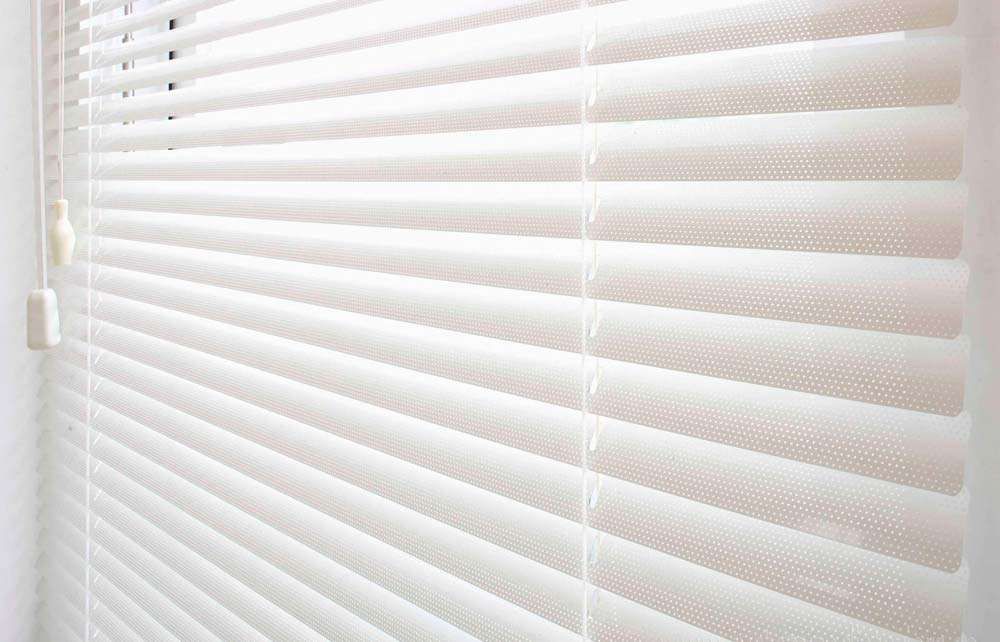
Most window coverings are a trade between light and privacy: more of one means less of the other. A venetian breaks that trade. With the slats angled up, someone at street level is looking at the underside of a slat while the daylight is bouncing off your ceiling into the room.
Angled down, it reverses — you can see out and downward, and the light comes in low. On west-facing glass, where the sun arrives at the window rather than down onto it, that's the setting that takes the glare off a screen without shutting the window off for the afternoon.
Which way round works depends on what's outside and how high up you are. It's worth trying both once the blind is in.
Book a free measuring visit
Tell us your area and roughly how many windows, and someone will come out with the range and measure up.
Aluminium, timber or faux wood
Aluminium slats are thin and light, and indifferent to heat and steam. They wipe clean, they don't swell, and they don't mind a bathroom or a window near a hob. On a wide window they're also the sensible answer, because the weight of a full stack of timber becomes real once the blind is raised.
Wooden slats are wider and heavier, and they change a room more the way a piece of furniture does than a window covering. Real timber wants a dry room — sustained damp moves it — so a bathroom takes a faux-wood slat instead, which looks like timber and behaves like plastic. Our wooden blinds are faux wood.
The honest downside of the whole product is dust. A venetian has a lot of horizontal surface, and it lives in a city with fine dust in the air, so it wants wiping more often than a flat blind does. That's the reason a lot of homes here put venetians where the tilt genuinely matters — an office, a kitchen, a bathroom, a window that faces something — and a roller or a curtain everywhere else.
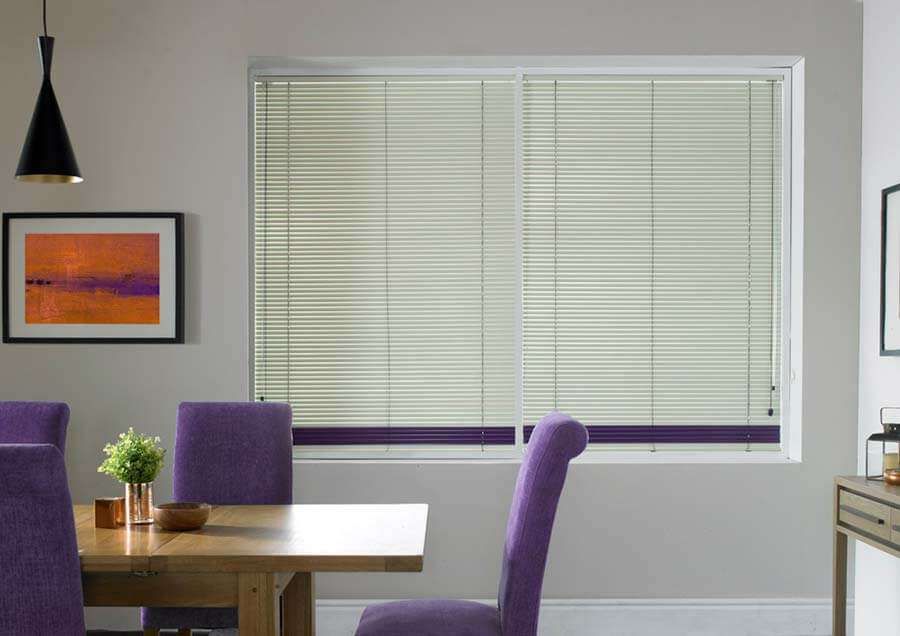
Venetian blinds in use
What to settle before ordering
These get decided at the window, because each one changes what's made:
- Aluminium or faux wood, chosen by the room rather than by the photograph.
- Inside the recess or on the wall in front of it. Inside is neater; outside covers the edges and suits a bedroom.
- Whether the window opens inwards, or a handle stands proud of the frame, either of which can rule an inside fit out.
- Which side the tilt wand and the lift cord sit, so neither ends up behind a door or a wardrobe.
- Cords or ladder tapes across the face of the slats — a visual decision rather than a mechanical one.
- Whether the blind will sit behind a curtain, since that decides what has to be fixed above the window.
We make the blind to those measurements and fit it ourselves, so if something needs altering later it comes back to the people who made it.
Get a quote for your windows
Call or WhatsApp us and we'll arrange a time to measure up and price the job before anything is made.