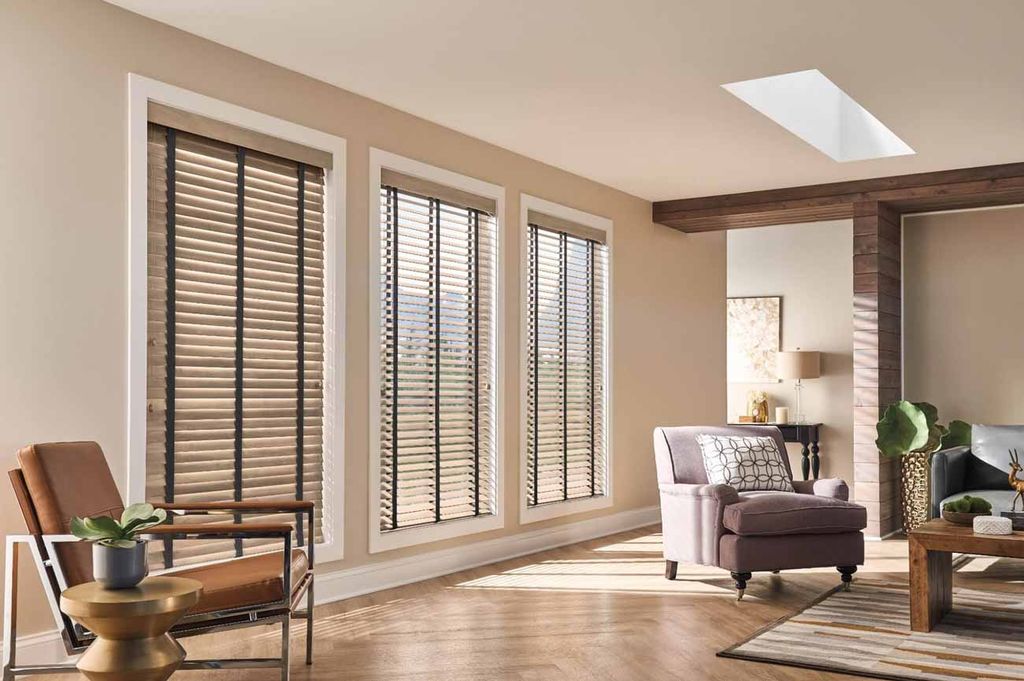
Wooden blinds in Dubai, in real timber or faux wood
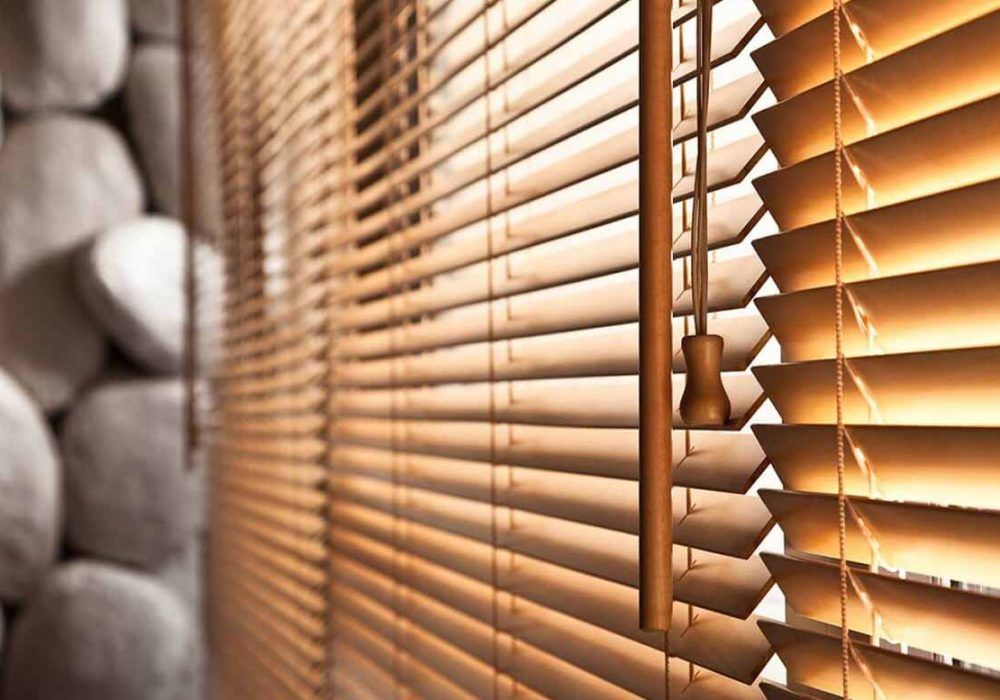
A wooden blind is a ladder of horizontal slats that tilt together. For a woven, more open natural material, see bamboo blinds. Tilt them part way and you keep the daylight but lose the glare and the view in from outside. Pull the lift cord and the whole stack rises clear of the glass.
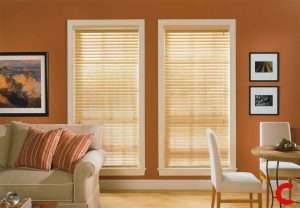
Two materials do that job differently. Real timber is lighter and warmer to look at. Faux wood is a PVC or composite slat that does not mind damp, which matters more in Dubai than it sounds.
Free measuring visit
Someone brings the slat samples to the window, measures the recess and checks what the brackets can fix into.
Timber or faux wood
Real wood for dry rooms, faux wood where there is steam or condensation. You can see and handle both before choosing.
One company throughout
We measure, manufacture, install and fit the tracks, and handle alterations, repairs and cleaning afterwards.
Where timber works and where it does not
Real wood is a natural material and it responds to moisture. In a bathroom, a wet kitchen, or at a window sitting under an air-conditioning outlet, timber slats can bow over time and the finish lifts at the edges.
Faux wood slats are made from PVC or a wood composite. They look close enough at normal viewing distance, they wipe clean, and they take steam and condensation without moving. The trade-off is weight: faux slats are heavier, so on a very wide window the stack becomes a lot to lift and real timber is easier to live with.
In a Dubai apartment that usually lands on timber in the living room and bedrooms, faux wood in the kitchen and bathrooms.
Book a free measuring visit
Tell us the rooms and roughly how many windows. Someone brings the slat samples and a tape to you.
What wooden blinds do about heat and glare
Most of the heat in a Dubai room arrives as direct sun through the glass. A slat tilted across that sun stops it landing on your floor and your furniture, which takes the edge off the afternoon. It is not insulation and it will not do much once the glass itself is hot, but the difference between direct sun on a sofa and no direct sun on a sofa is large.
Glare is the more useful thing to talk about. On a blind, the slat angle and how much of the window is covered are two separate controls, so you can take the glare off a screen and keep the room bright. A curtain gives you open or closed.
West-facing glass is where that earns its place. From mid-afternoon the sun comes in low and nearly horizontal, and a slat angled down against it does more than anything you can do with fabric.
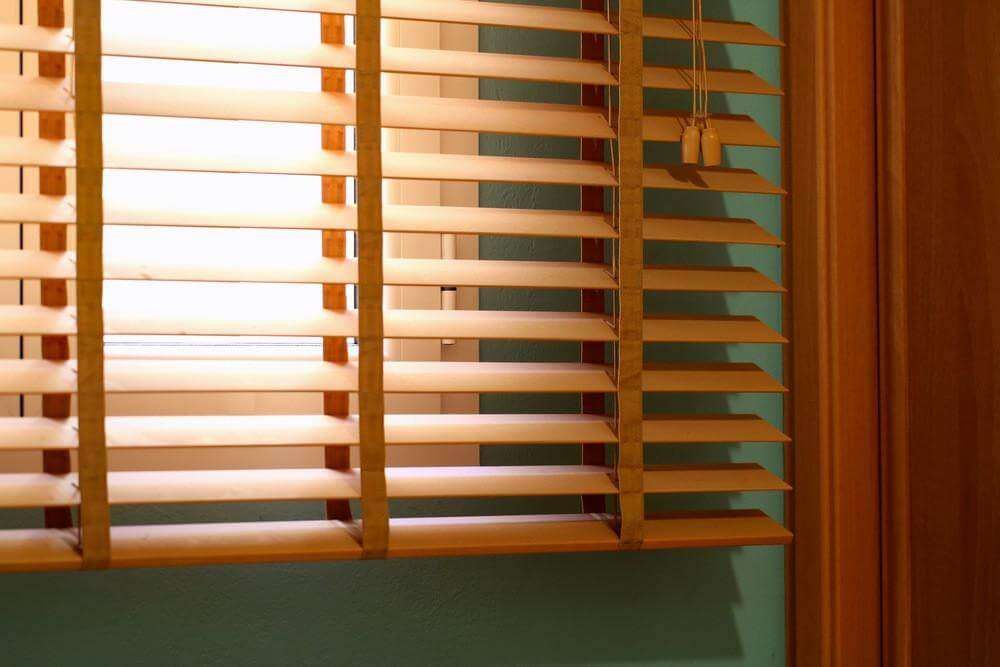
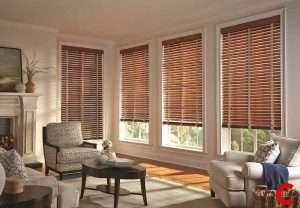
Wooden blinds: slats and finishes
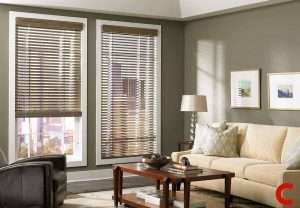
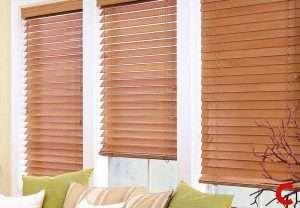
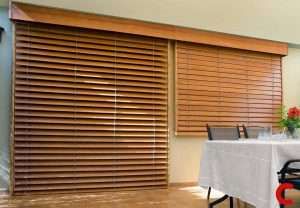
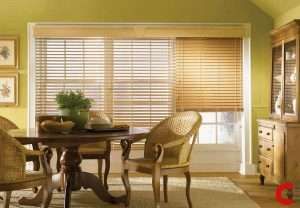
Privacy, and what happens after dark
Wooden slats are solid, so closed they are a real barrier rather than a shadow — unlike a fabric or PVC blind that turns translucent with light behind it. Turn them fully down and the view in is gone.
After dark the geometry reverses. With the lights on inside, slats left even slightly open look straight into the room from below, so the habit worth getting into is closing them fully rather than nearly. It is also why a bedroom facing a walkway or a neighbouring tower often ends up with a blind and a curtain rather than one or the other.
Slat width, tapes and where the controls sit
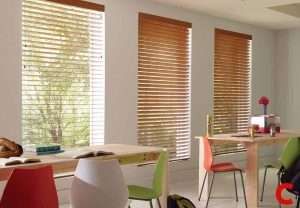
Slats come in a few widths, and 25 mm, 50 mm and 63 mm are the ones you will see most. A wider slat stacks into a shorter bundle at the top and shows more view when it is open. A narrower slat suits a small window, where a 63 mm slat looks out of scale.
Ladder tapes are the fabric strips running down the face of the blind, covering the cord holes. They are a look rather than a function: a taped blind reads more traditional, an untaped one is plainer and leaves the grain uninterrupted.
Worth deciding at the same time is whether the tilt runs on a wand or a cord, and which side the controls sit on. At a window you reach across a worktop for, that choice is the difference between using the blind and leaving it.
Timber or faux wood?
Call or WhatsApp +971 50 280 8765. Tell us the room, the width, and whether it gets steam or direct sun — that is usually enough to say which of the two makes sense.