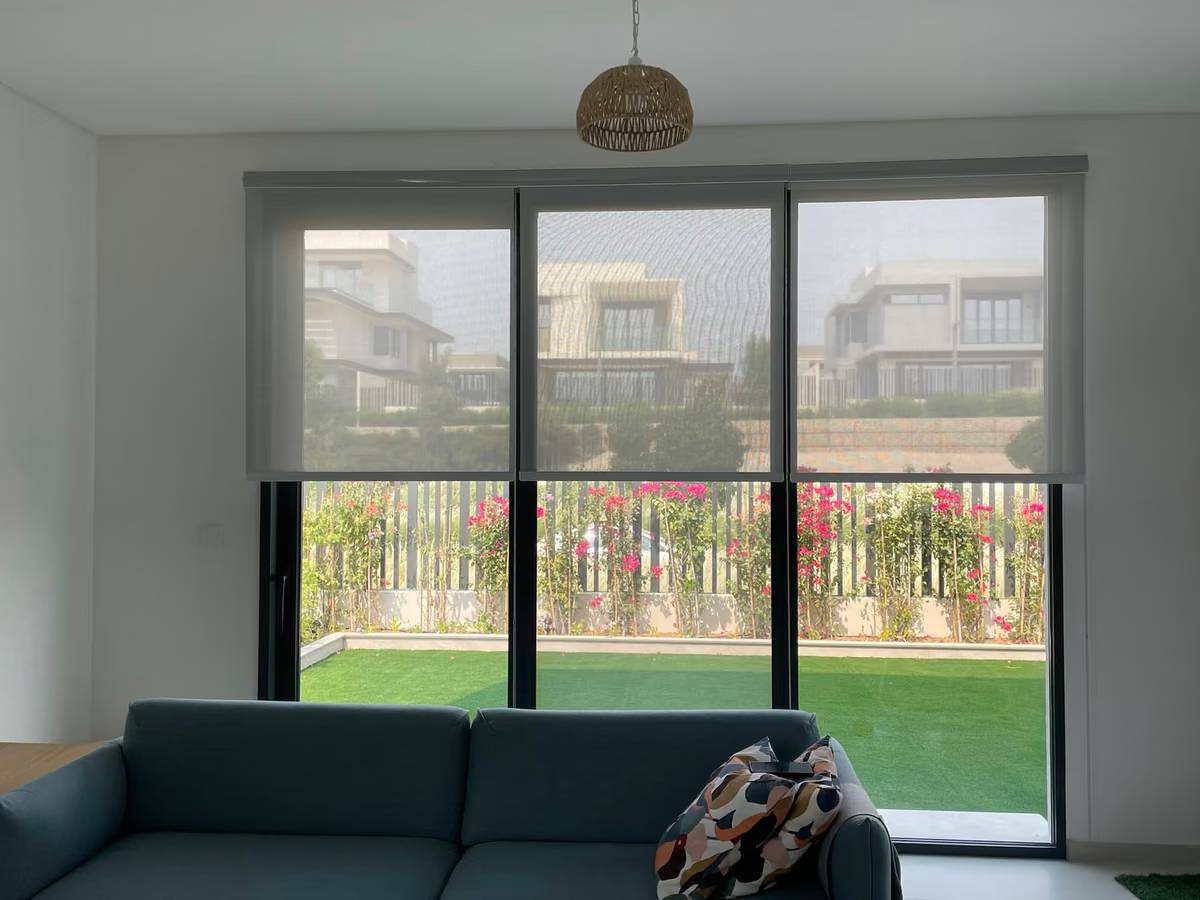
Sunscreen and blackout roller blinds for a Jebel Ali Village villa
AED 6,734 for nine blinds
Free measuring & installation across Dubai
A blackout blind is a blind made in a fabric that lets no light through it. How dark the room gets then depends on the gaps round its edges, and the fitting is what closes them.
Curtains Express measures, makes and fits blackout blinds in four types: roller, vertical, roman and honeycomb. Each is made for one window and usually fitted within about a week of your go-ahead; a roller can go inside the recess, over it on the wall or on the ceiling.
AED 90 per m²
for a blackout roller, with the headrail, chain and fitting included.
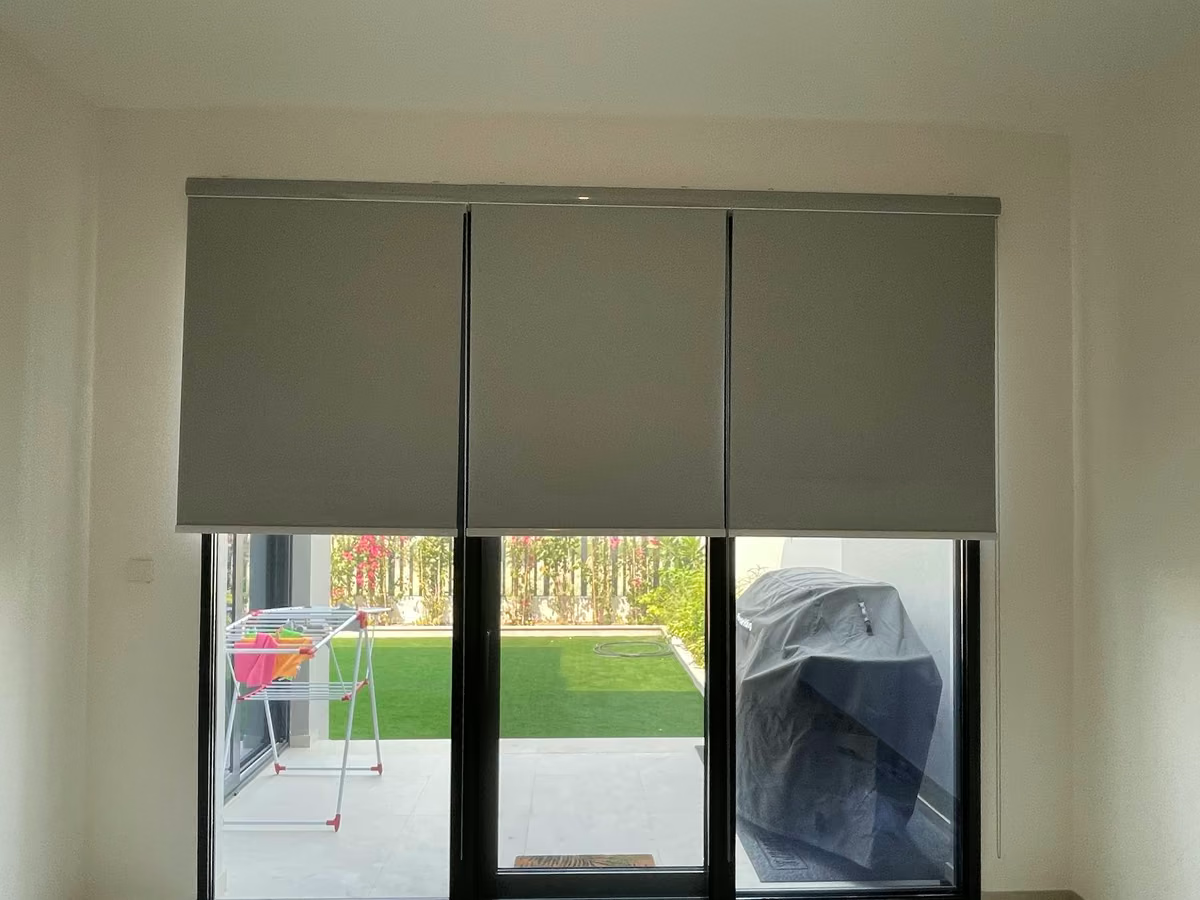
The smallest blackout roller is AED 180 fitted, its 2 m² minimum. A 150 × 180 cm window comes to AED 243 as a roller, AED 330 as a vertical, AED 486 as a roman and AED 567 as a honeycomb. The photograph is one of ours: three blackout rollers we fitted over the frame, with a cassette, which costs extra, in a Jebel Ali Village villa.
There's no showroom. Someone brings the blackout fabrics to the window you want dark, so you see them in your own light, and measures it. The visit is free, anywhere in Dubai.
The fit is chosen for how dark the room has to be: inside the recess, on the wall over it, or with side channels and a cassette.
Each blind has two years' warranty, and a call about it goes to the people who measured the window and fitted the blind.
The roller is the usual answer. The other three are for windows where a roller isn't: a sliding door, a room that wants fabric folds, or the look of a pleated blind.
| Roller | Vertical | Roman | Honeycomb | |
|---|---|---|---|---|
| What it is | One flat sheet of fabric on a roll | 127 mm louvres that turn and draw aside | Fabric that folds up in sections | A pleated blind made of hollow cells |
| How dark | Darkest, in side channels under a cassette | Light at the edges | Light at the edges | Light at the edges |
| Best on | Bedrooms, single windows, behind a curtain | Sliding doors and wide glass | Bedrooms that want fabric | Windows with a recess |
| Widest as one blind | 280 cm wide | About 4 m wide | 280 × 300 cm | 200 cm wide |
| Least area charged | 2 m² | 3 m² | 2.5 m² | 2 m² |
| Motor | Somfy or Dooya | Dooya, wired | Somfy, wired | Dooya |
Zebra blinds dim a room without darkening it, and faux wood slats let light through even when closed, so neither is made as a blackout blind.
Every blind here is priced on the area it covers, at a rate per m² that includes the headrail, its controls and the fitting. Pick one, type the width and drop of your window, and the sum is worked out in front of you.
Blackout costs the same as the rest of each range, except on a vertical blind: AED 110 per m² in blackout against AED 80 in sunscreen.
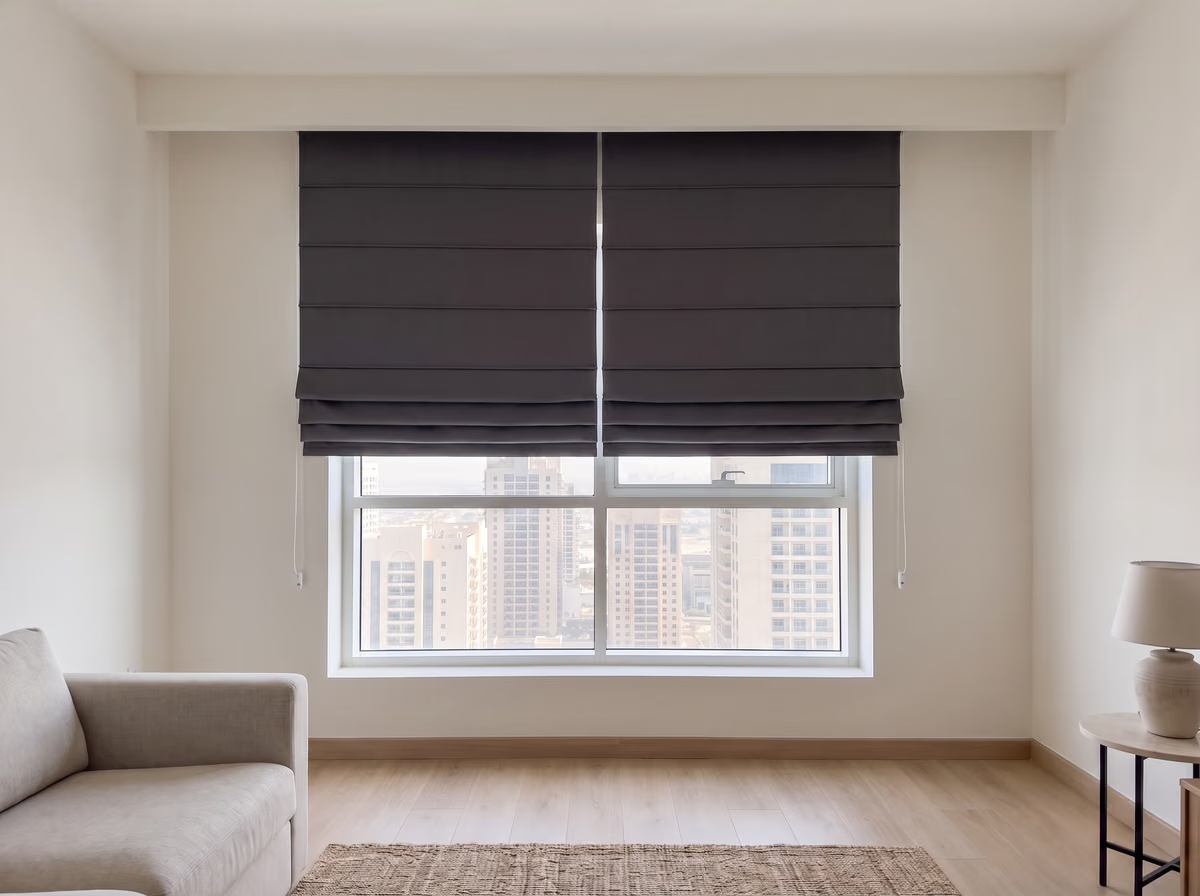
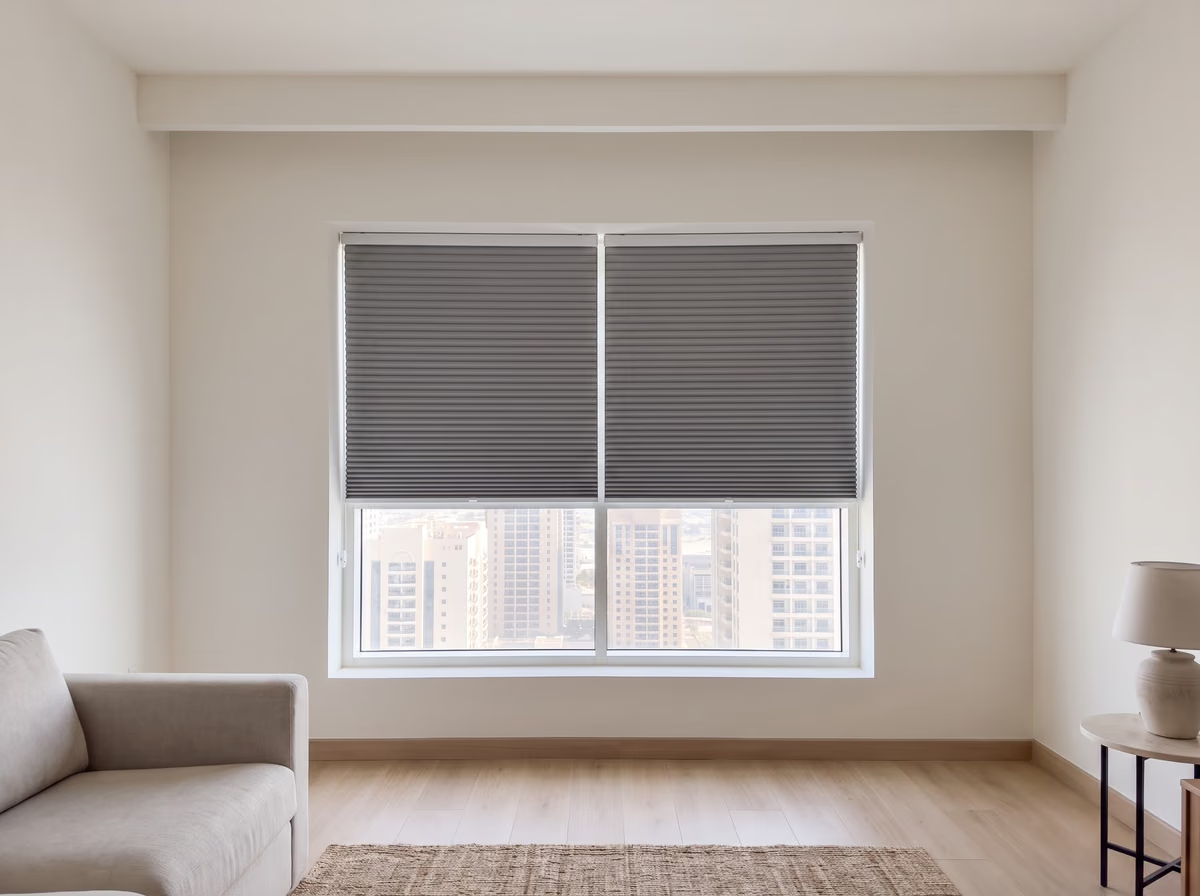
Window size
Headrail, chain and fitting included. Base estimate. A cassette, side channels, a motor or work at height cost more, each priced at the free measuring visit.
AED 243
Base estimate. A cassette, side channels, a motor or work at height cost more, each priced at the free measuring visit.
Blackout fabric stops the light that reaches it. The rest comes round the edges, so the fit decides how dark the room gets.
Choose a fit to see it drawn from the front and from above. Red marks where daylight still gets in.
A roman blind gets darker fitted on the wall over the recess, and any blind gets darker with a blackout curtain in front of it. The cassette and the three roller fabrics are covered on our roller blinds page.
Tell us which room has to go dark, the window's rough size and whether it sits in a recess. Someone brings the blackout fabrics to you and settles the fit at the window.
A blind covers the glass and nothing else, so it suits a window with a bed, a desk or a sink against the wall under it. A blackout curtain runs past the frame on both sides, so it covers the edges a blind leaves, and it softens the room.
On the same window the curtain costs more, because it covers more than the glass. A 150 × 180 cm window takes a blackout roller at AED 243. A pinch-pleat blackout pair on a track running 30 cm past each side, with a 260 cm drop to the floor, is 10.92 m² of fabric at AED 45, about AED 491. That is roughly twice the price, for a darker room.
The darkest bedrooms have both: the blind against the glass and the curtain in front, each drawn on its own.
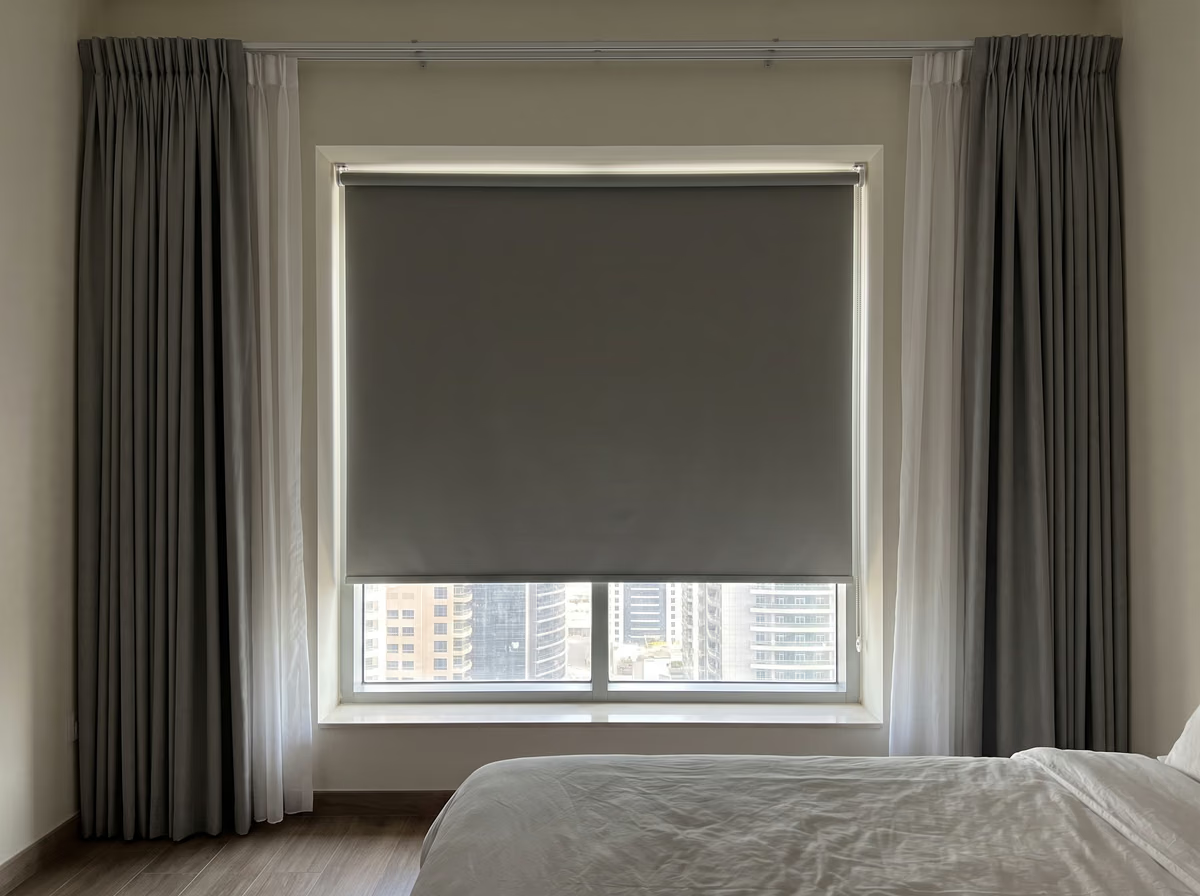
The rooms that most often need one, and what each asks of the fit.
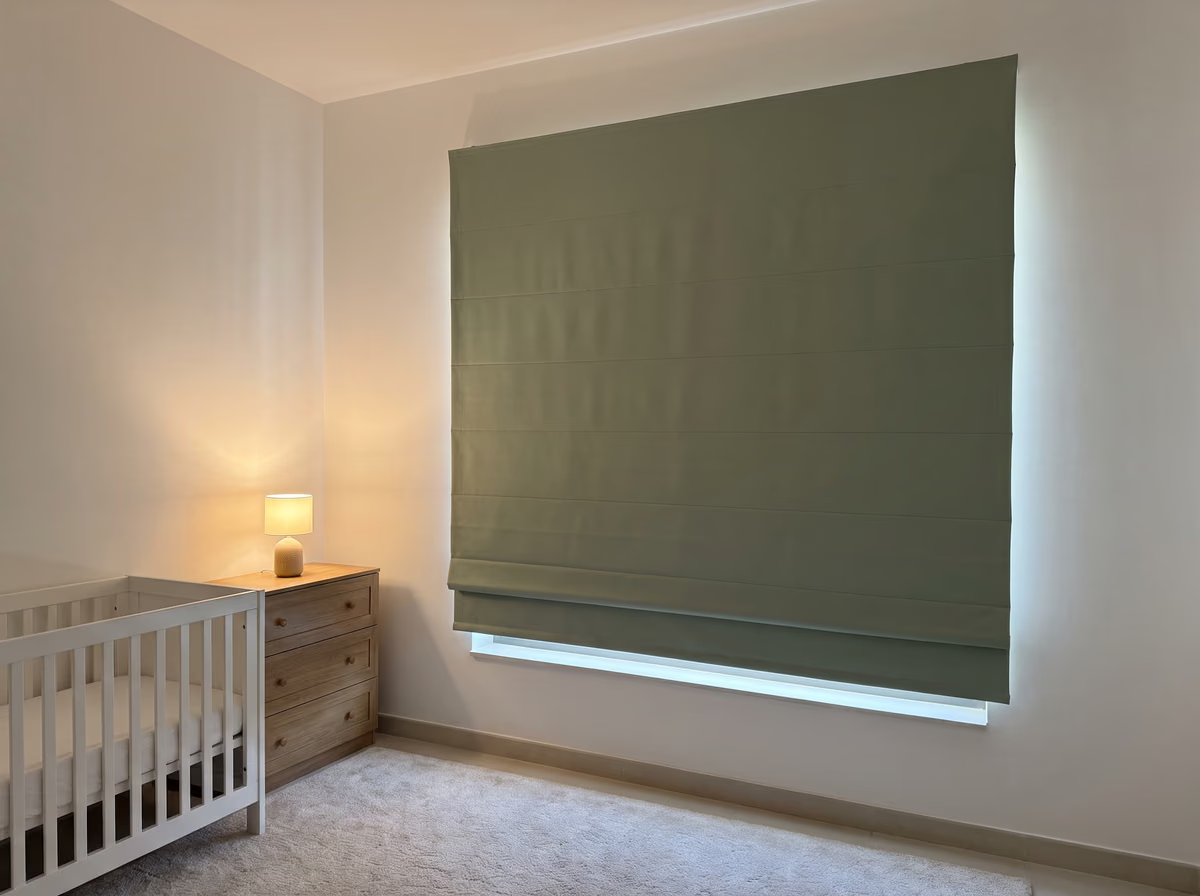
By June the sun rises before half past five. An east window takes it straight on, so the blind has to be dark at its edges, not only in the cloth: over the recess at least.
Cabin crew, nurses and anyone working nights go to bed as the city wakes up. A blackout roller in side channels, or a blind behind a blackout curtain, is the usual answer.
Naps happen at two in the afternoon, in full sun. A motorized blind leaves no chain hanging at the window, which is one reason it suits a child's room.
A projector needs the room dark in the afternoon, and a screen shows up every line of light on the wall beside it. Rollers over the recess, or in side channels, are the usual fit.
Know these before you buy one.
Down, a blackout blind gives you no view and no daylight; up, it gives you both. Most rooms that need one also want something for the day, such as a sheer curtain in front that filters the light while the blind stays up.
Inside a recess, a blackout blind shows a bright line down each edge. Only the fit, or a curtain in front, closes it.
A blackout blind keeps direct sun off the room, which takes the edge off a west room in the afternoon. It shades the room rather than insulating it, and we don't quote a saving on your cooling bill.
A blind is too thin to stop street or corridor noise. A heavy lined curtain softens echo inside a room, but nothing on this page is soundproofing.
For a window of a standard size in a rented flat, a ready-made blackout roller from a homeware store or IKEA costs less than anything here, and you can have it today. It comes in the store's sizes, fitted inside the recess, with the light at the edges that goes with that.
Every blind on this page takes a motor: a roller a Somfy or a Dooya, a vertical a wired Dooya, a roman a wired Somfy and a honeycomb a Dooya. Electric and automatic blackout blinds are the same thing by other names. We quote the motor at the visit.
A wired motor has to have power at the headrail, so plan it before the ceiling goes in. Motors make most sense on a blind out of reach, on several blinds that should move together, and in a child's room. More on our motorized blinds page.
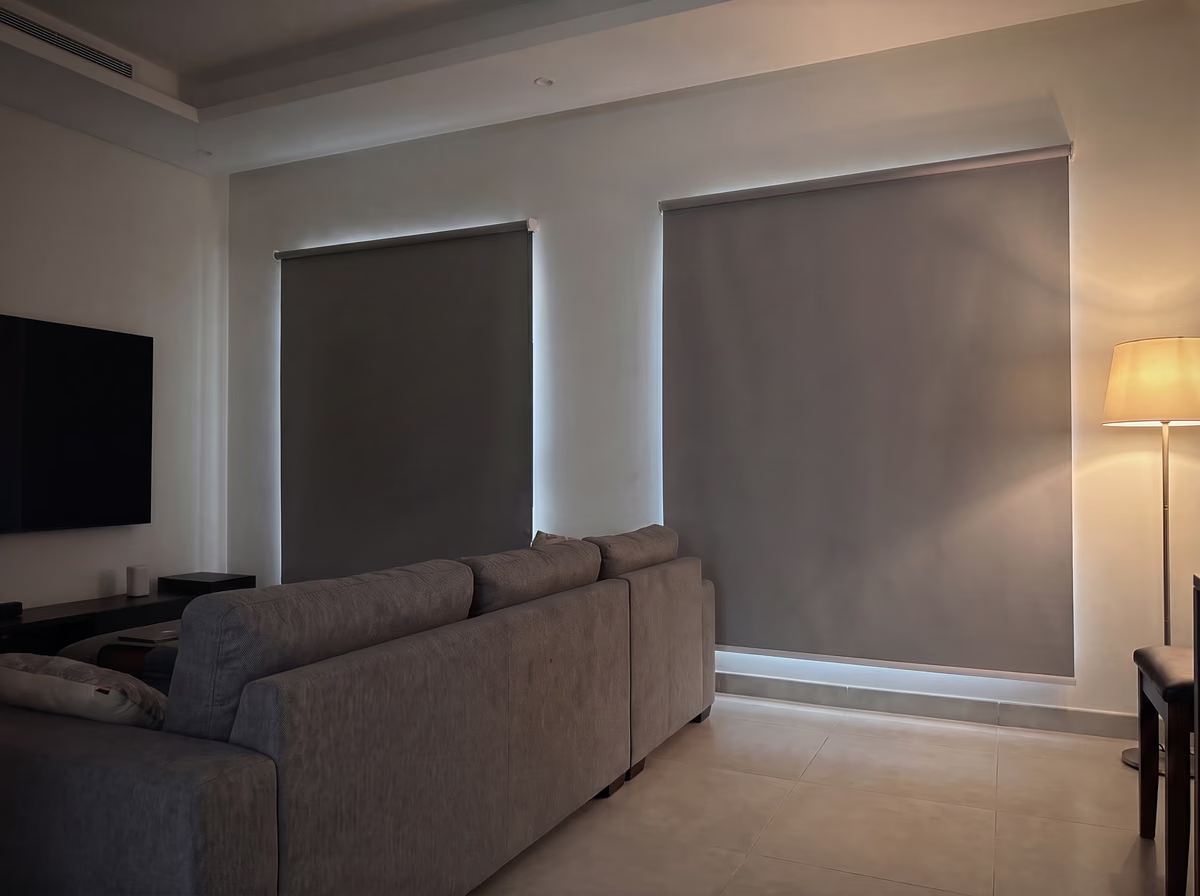
AED 6,734 for nine blinds
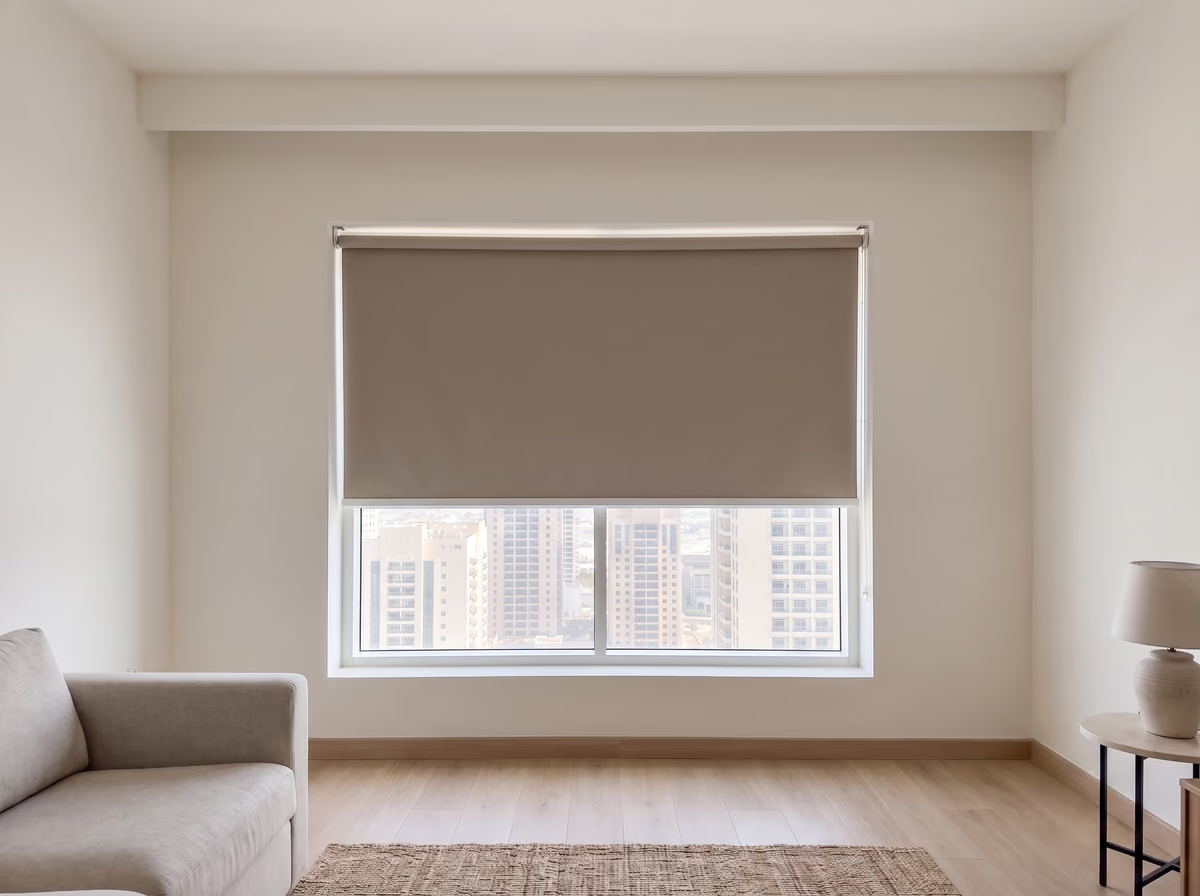
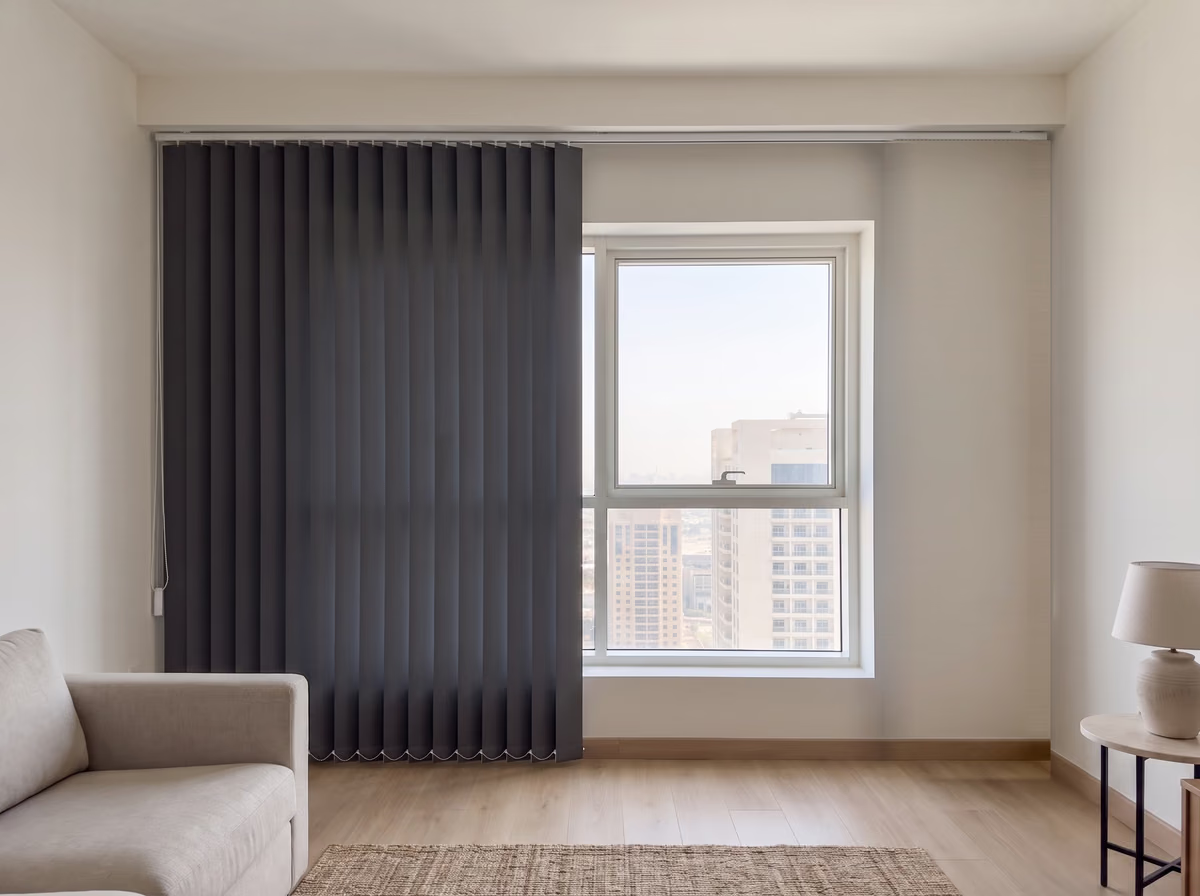
Illustrations of the blinds on this page in the rooms they suit, not jobs of ours. The job above is ours.
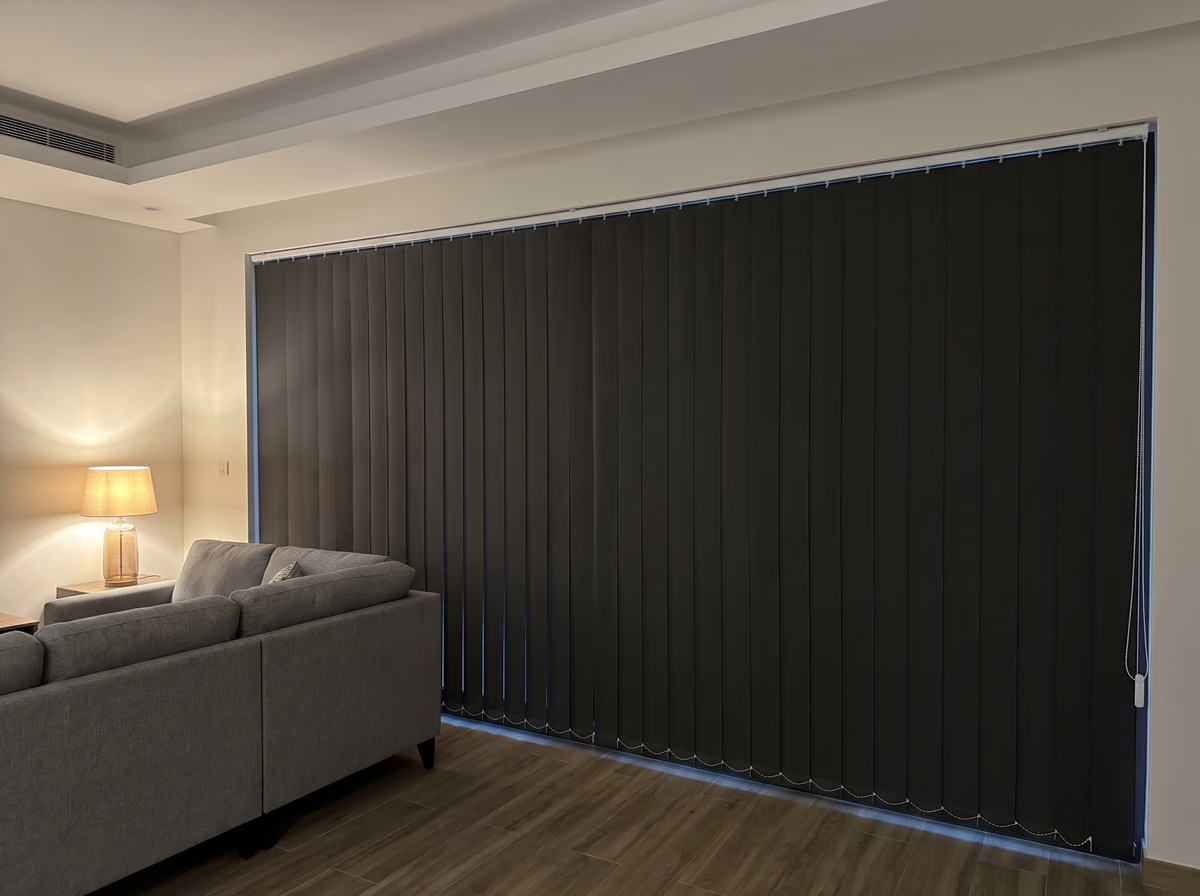
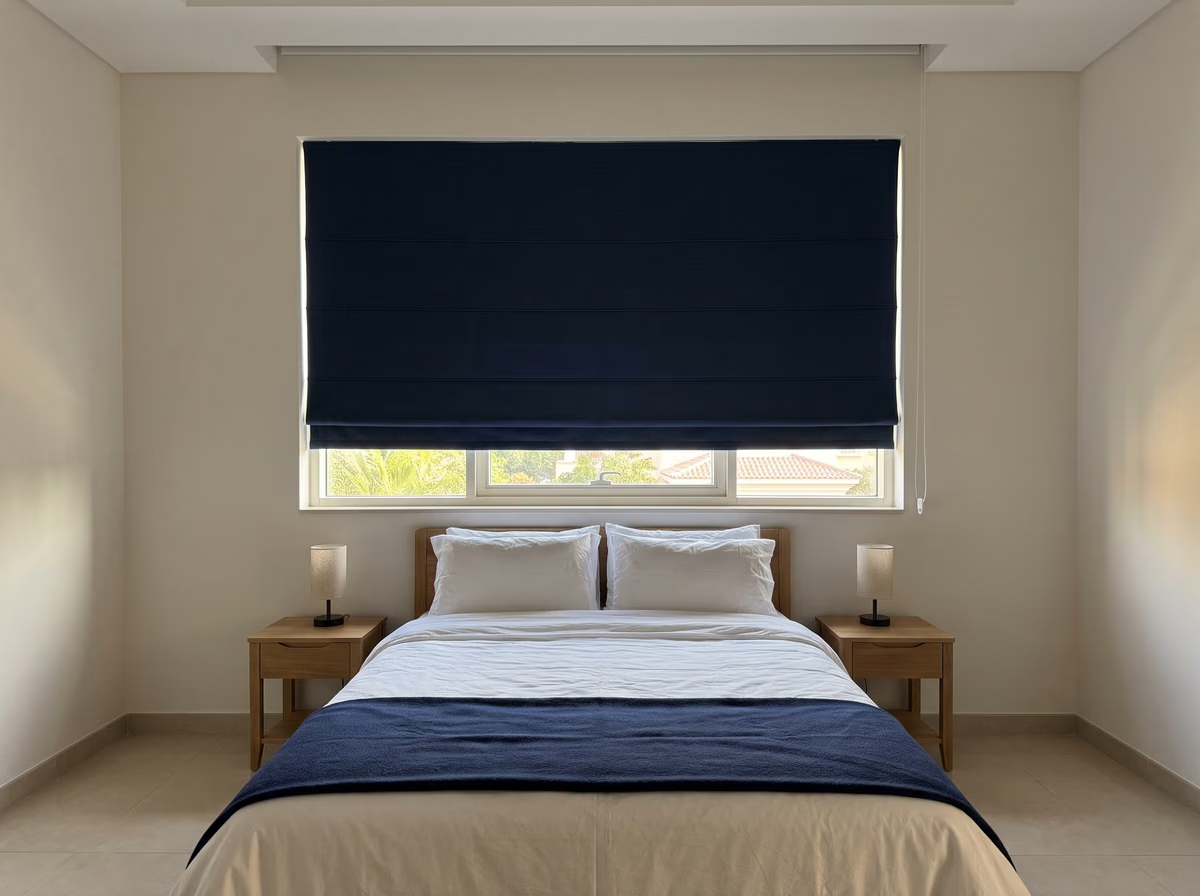
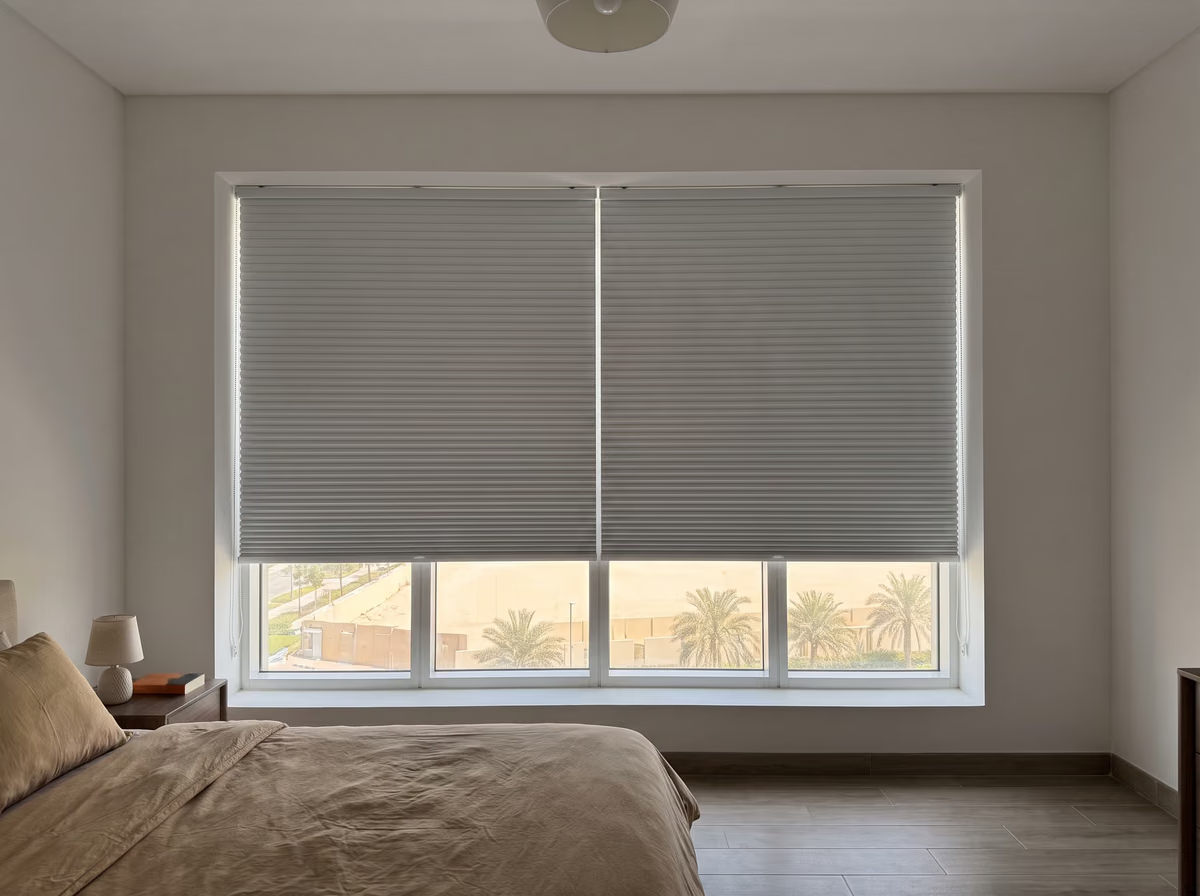
From AED 90 per m² for a blackout roller, with the headrail, chain and fitting included, and the smallest costs AED 180, its 2 m² minimum.
A blackout vertical is AED 110 per m² with a 3 m² minimum, a roman AED 180 with 2.5 m², and a honeycomb AED 210 with 2 m². On a 150 × 180 cm window that comes to AED 243, AED 330, AED 486 and AED 567. A cassette, side channels or a motor cost more, priced at the measuring visit.
A blackout roller, because it can run in side channels under a cassette, which closes the edges as well as the cloth.
On a sliding door or wide glass, a blackout vertical blind is the practical choice. A roman or a honeycomb blind suits a room that wants their look, with a little light at the edges.
No, not by themselves. The fabric passes no light, but a blind inside the recess leaves a thin line of daylight down each side.
Side channels and a cassette on a blackout roller get a room as dark as a blind can, and a blackout curtain in front of any blind closes what is left.
Three, mainly. Down, they take the view and the daylight together; inside a recess they leave light at the edges; and fitted over the recess they look a little larger than the window.
They shade a room without insulating it, and they are no help with noise.
Yes, where someone has to sleep while it is light outside: an east-facing bedroom, a nursery, a night shift.
For a living room that only needs the glare off the glass, a sunscreen roller keeps the view and costs the same AED 90 per m².
A blind where something stands against the wall under the window, such as a bed, a desk or a sink, and a curtain where you want the edges covered and a softer room.
On the same window a blind costs less, because a curtain covers more than the glass. A 150 × 180 cm window is AED 243 as a blackout roller, and about AED 491 as a pinch-pleat blackout pair hung to the floor. The darkest rooms have both.
Yes. A roller can sit inside the recess, and so can a roman in a recess at least 7 cm deep. It looks neatest and keeps the sill clear.
Light shows down both sides of it, though, so for a bedroom that has to be dark, fit it over the recess or in side channels.
Yes, on blackout roller blinds, both priced at the measuring visit.
Side channels close the gaps down each side and a cassette covers the roll at the top, so together they make a roller as dark as a blind gets. The base AED 90 per m² is an open roll on brackets.
No. A zebra blind dims a room, because daylight still comes through its stripes.
If the room must go dark, a blackout roller or blackout curtains will do it. Our zebra blinds page explains what a zebra does well.
No. Our wooden blinds are faux wood, and light comes between the slats even when they are closed, and the same is true of our aluminium venetian blinds.
For a wood look in a room that has to be dark, hang blackout curtains in front of the blind, or choose a blackout roman instead.
Yes, all four: a roller with a Somfy or Dooya motor, a vertical with a wired Dooya, a roman with a wired Somfy, and a honeycomb with a Dooya.
A motor is priced at the measuring visit, and a wired one needs power at the headrail.
They keep direct sun off the room, which helps in a west-facing room in the afternoon. A blind shades; it doesn't insulate, and we don't quote a saving on cooling.
Send the room, the window's rough width and drop, which way it faces and whether it sits in a recess. We will tell you which blind and fit will darken it, and what it costs.