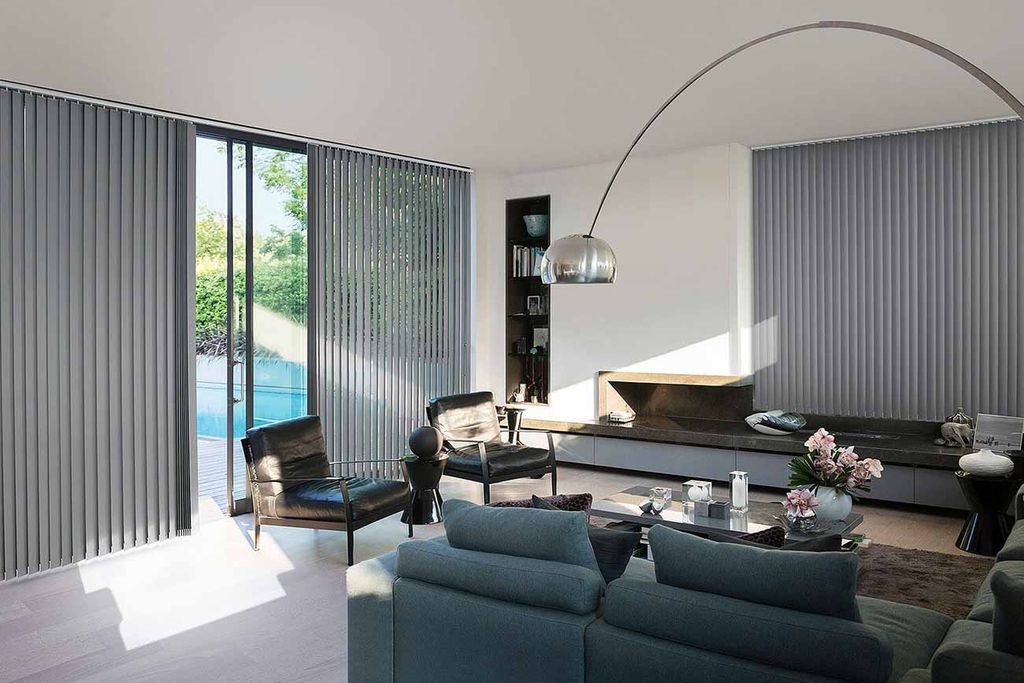
Vertical blinds for wide windows and glass doors in Dubai
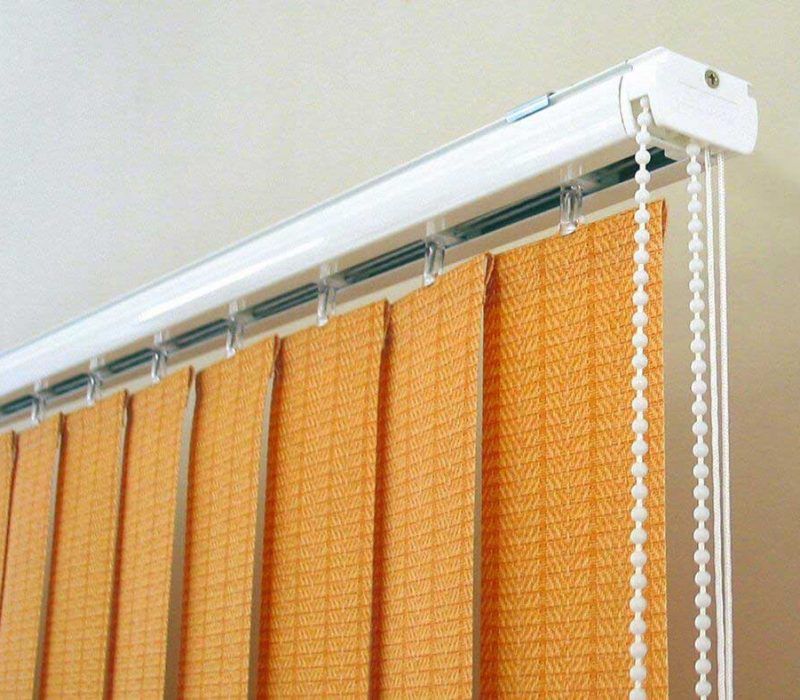
Vertical blinds hang as separate louvres from a headrail. Each one turns on its own carrier, so you can angle them against the sun without closing the room off, then draw the whole set to one side when you want the glass clear.
That is why they end up on the widest openings — balcony sliders, patio doors, long office glazing. A stack of louvres takes far less room at the end of a run than a gathered curtain does.
Free measuring visit
Someone comes to the window with the fabric range, measures the opening and works out what the headrail can fix into. Nothing is ordered before that.
Cut to the opening
Louvres are made to your drop rather than trimmed down from a stock size, so the hem clears the floor or the sill by the same amount along the whole run.
Fitted and serviced by us
The same company measures, manufactures and installs, and handles alterations, repairs and cleaning afterwards.
Made to the width of the opening
Vertical louvres come in two common widths, 89 mm and 127 mm. The wider slat suits a long run of glass because there are fewer joins across it. The narrower one looks less heavy on a standard window.
The other decision is where the stack goes. Louvres can draw to the left, to the right, or split from the middle to both ends. They are also the usual answer along a run of office glazing, and a close relative of panel blinds, which cover the same wide spans in fewer, larger pieces. On a sliding door it matters: park the stack over the fixed pane and the door still opens without pushing fabric out of the way.
Both get settled on the measuring visit, along with whether the headrail sits inside the reveal or across the face of it.
Book a free measuring visit
Tell us your area and roughly how many windows. Someone brings the fabric range to you and measures on site.
Sunscreen, dimout or blackout
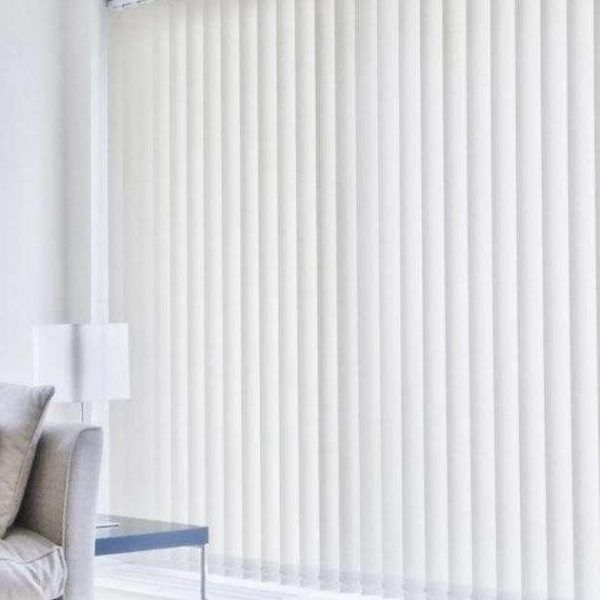
The fabric decides what the blind actually does. A sunscreen weave is open enough to keep the view and the daylight while taking the glare off — it reads as a screen rather than a wall. A dimout drops the light a long way but still glows. Blackout louvres stop it.
Because each louvre turns, a blackout vertical gives you two positions instead of one: on edge for a clear view, closed flat for a dark room. That is why they turn up in bedrooms with wide glass, where a roller is one or the other.
PVC louvres are the third option. They wipe down with a cloth, which is worth something in a kitchen or a room facing a building site.
Wooden vertical blinds get asked for by name, and it is worth knowing what the phrase usually covers. A true timber louvre hanging vertically is uncommon and heavy for its width; what most people picture is either a wood-look louvre, which behaves like the PVC above, or horizontal wooden blinds — a different product, and often the better one for the window being described.
What the headrail fixes into
A vertical blind carries its whole weight along one rail, so the fixing has to reach something solid across the span. In most towers that means a gypsum bulkhead above the glass, and an anchor that finds the framing behind the board rather than gripping the board itself.
Villas more often give you a concrete lintel, which takes a different anchor again. Wide runs need brackets spaced along the rail rather than only at its ends — a long headrail held at two points will bow in the middle.
It gets worked out at the measuring visit, before anything is cut or drilled.
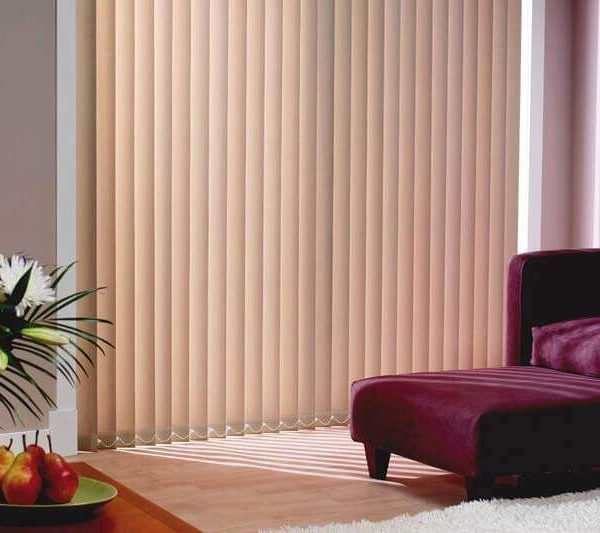
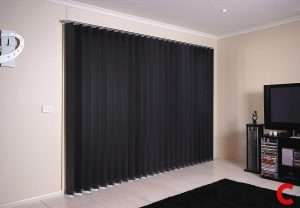
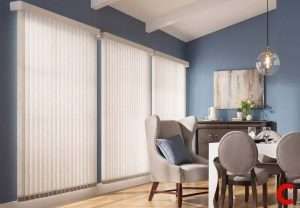
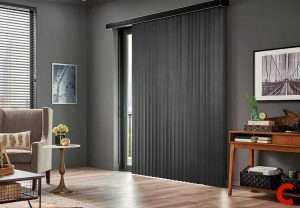
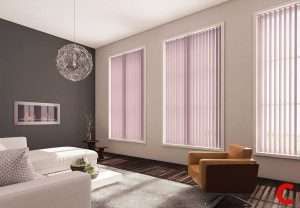
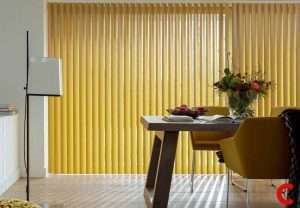
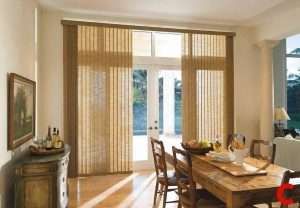
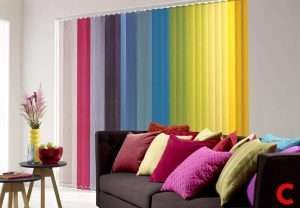
Vertical blinds in different fabrics
Dust, cleaning and the odd broken louvre
Louvres hang free and move in the draught, so they collect dust faster than a flat blind does. PVC wipes down. Fabric louvres unhook from their carriers one at a time, which means they can come off for a wash and go back up without the rail leaving the wall.
The same detail covers accidents. A louvre caught in a door or torn at the bottom weight is replaced on its own instead of re-making the blind. Alterations, repairs and cleaning are part of what we do, so a blind that goes wrong later comes back to the people who made it.
Not sure which fabric?
Call or WhatsApp +971 50 280 8765 and describe the window — how wide it is, which way it faces, and what sits above the glass.