Wave curtains in Dubai, on a track of their own
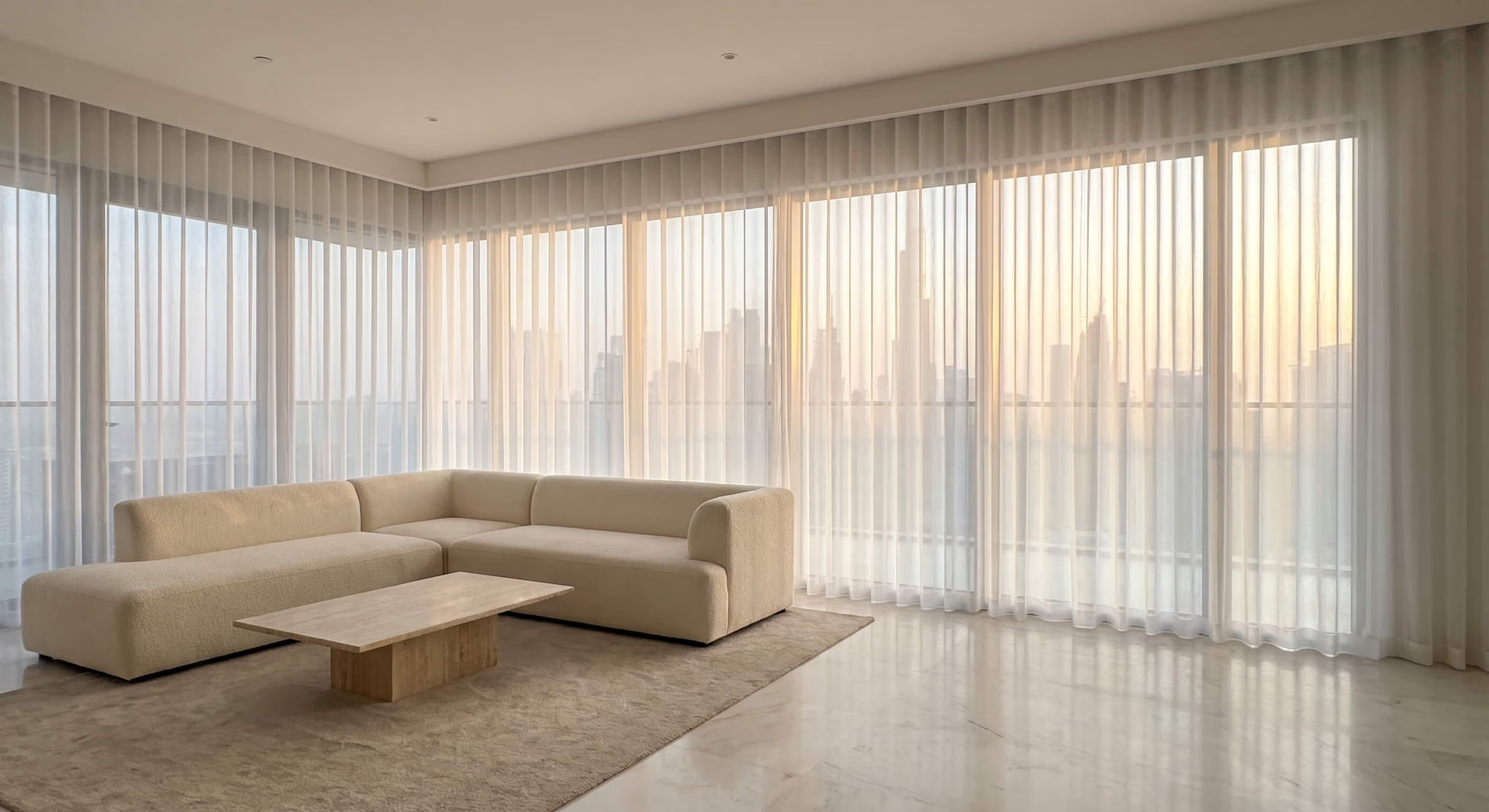
A wave curtain, also called a ripple fold or S-fold curtain, hangs in even, continuous folds from carriers spaced along its own track.
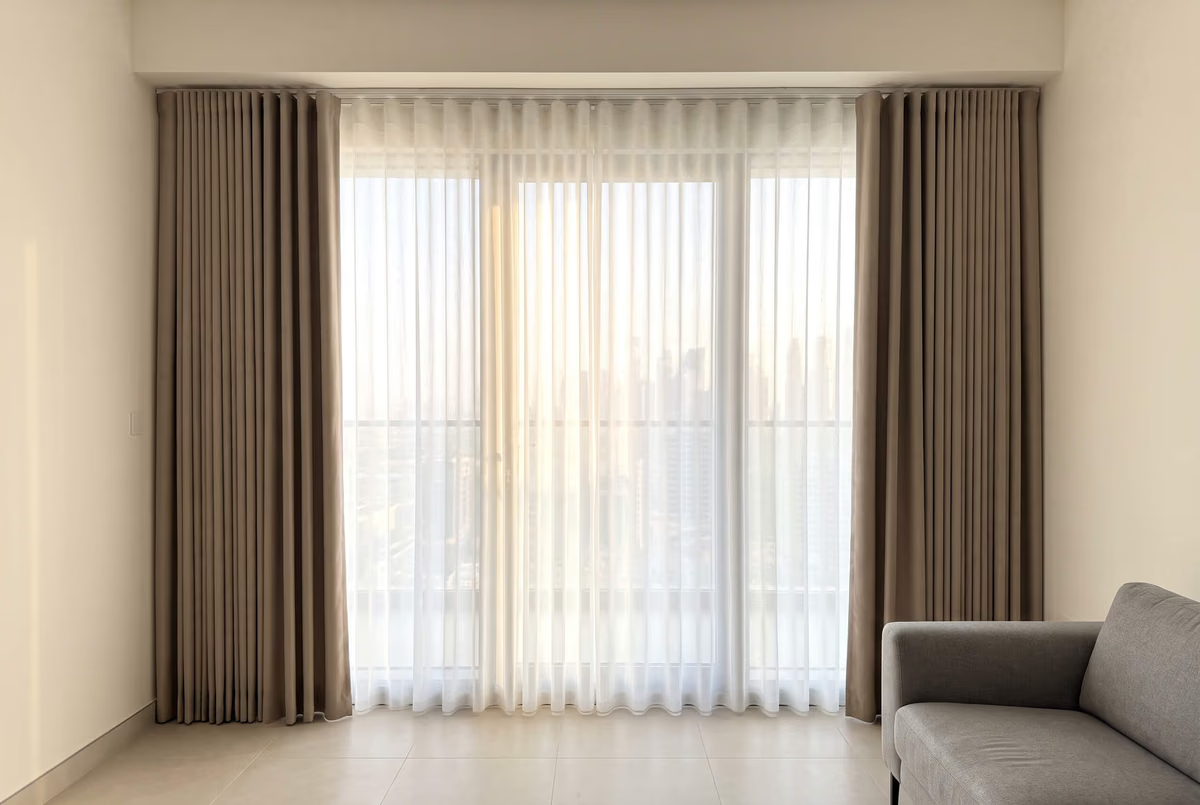
Ours are made to measure at 2.5× fullness in sheer or blackout fabric, with a snap tape across the top that clips onto the carriers. The track comes with it: white, on the ceiling, the wall or inside a curtain pocket.
Closed, the folds keep the same rhythm across the whole width, which is why the heading suits the long walls of glass in Dubai towers and villas.
AED 35 per m²
in sheer, with the ripple fold track and fitting included.
Blackout wave curtains are AED 45 per m². Curtains Express measures, makes and fits every wave curtain, usually within about a week of your go-ahead, and every pair carries a two-year warranty on stitching and fitting.
Free measuring visit
There's no walk-in counter. Someone brings the fabric book to your home or office, measures the glass and checks what the track will fix into.
Track and fitting included
The price per m² covers the white ripple fold track, its carriers and the fitting. A sheer and blackout pair shares a double track, also included.
Two-year warranty
Usually fitted within about a week of your go-ahead, and covered for two years on stitching and fitting by the people who made the curtains.
Wave curtains at a glance
- A wave curtain hangs in even, continuous S-shaped folds held by carriers along its own track; ripple fold and S-fold are other names for the same heading.
- Curtains Express makes wave curtains to measure at 2.5× fullness, with a snap tape sewn across the top that clips onto the carriers.
- A wave curtain track is white and fixes to the ceiling, the wall or inside a curtain pocket, and it can be bent to follow a bay or a curved window.
- Drawn back, a wave curtain stacks into 18 to 25 cm for every metre of track.
- A sheer and a blackout wave curtain can share a double track, which needs a curtain pocket 20 to 25 cm deep.
- Wave curtains can be motorized with Somfy or Dooya; an eyelet curtain can't.
- At Curtains Express, wave curtains cost from AED 35 per m² in sheer or AED 45 per m² in blackout, with the ripple fold track and fitting included, are usually fitted within about a week, and carry a two-year warranty on stitching and fitting.
Prefer a pole? Eyelet curtains hang from rings straight onto one. For the sheer on its own, see sheer curtains.
What wave curtains cost in Dubai
Wave curtains start at AED 35 per m² in sheer and AED 45 per m² in blackout. Both prices include the ripple fold track and the fitting, and a sheer and blackout pair shares a double track, also included.
A wave curtain is made at 2.5× fullness: 2.5 m of fabric for every metre of track. A 200 × 300 cm window takes 15 m², so it costs AED 525 in sheer, AED 675 in blackout, or AED 1,200 for both on one double track.
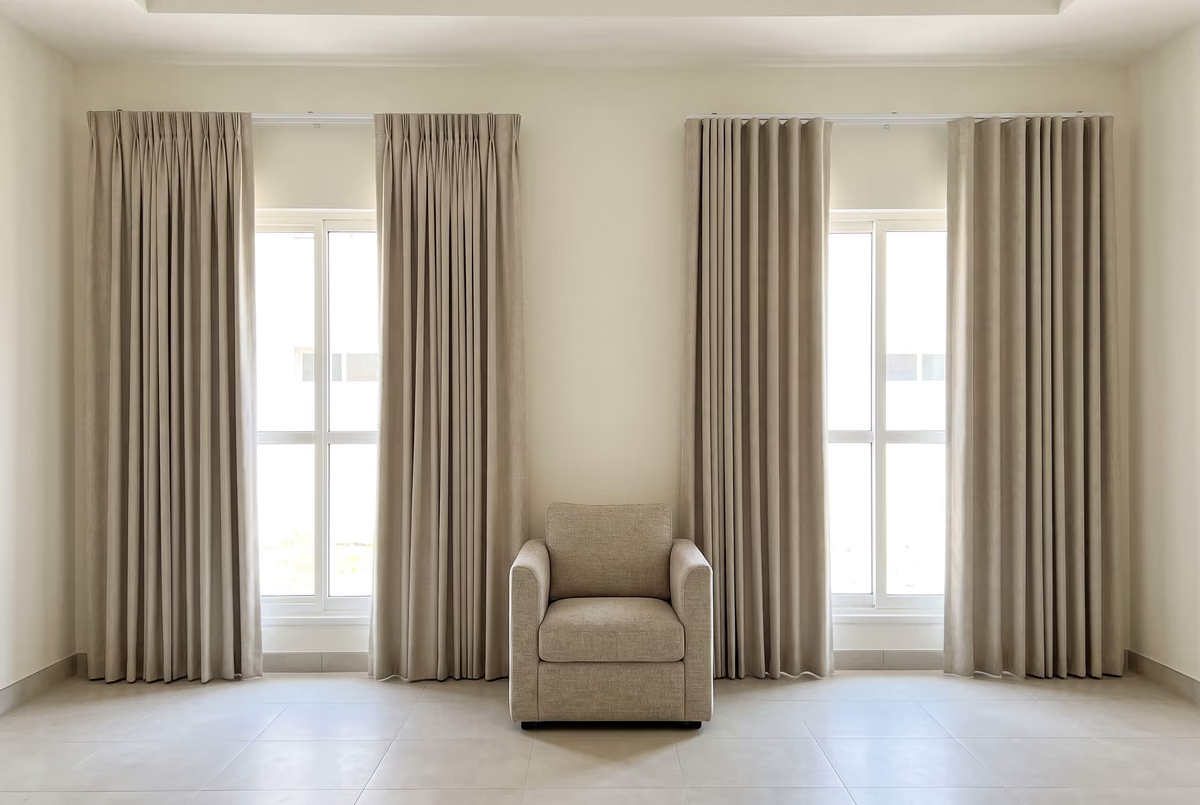
The same window in pinch pleat, at 2× fullness, takes 12 m²: AED 420, AED 540 or AED 960. The difference is the extra cloth, and the extra cloth is what makes the wave even.
Price your wave curtains
- Fabric
- 200 cm × 2.5 (fullness) × 300 cm = 15 m²
- Sheer
- 15 m² × AED 35 = AED 525
- 0 m² × AED 0 = AED 0
AED 525
Ripple fold track and fitting included; a sheer and blackout pair shares one double track. The final figure follows the free measuring visit.
What changes the price:
- The fabric
- Plain sheer voile from AED 35 per m², blackout with its four-pass lining from AED 45 per m². Linen, chiffon, organza and embroidered sheers cost more.
- The fullness
- 2.5× is standard. Fuller folds are made on request, priced on the extra fabric.
- A second layer
- A sheer behind a blackout shares a double track, included. Each curtain is priced on its own fabric.
- A motor
- A Somfy or Dooya motorized track replaces the manual one, at its own price per metre plus the motor. Motorized curtains has the figures.
The measuring visit is free, and nothing is made until you have agreed the final figure; a rough size on WhatsApp gets you a first one. Pay by card, Apple Pay or Google Pay, or in instalments with Tabby or Tamara.
How a wave curtain holds its fold
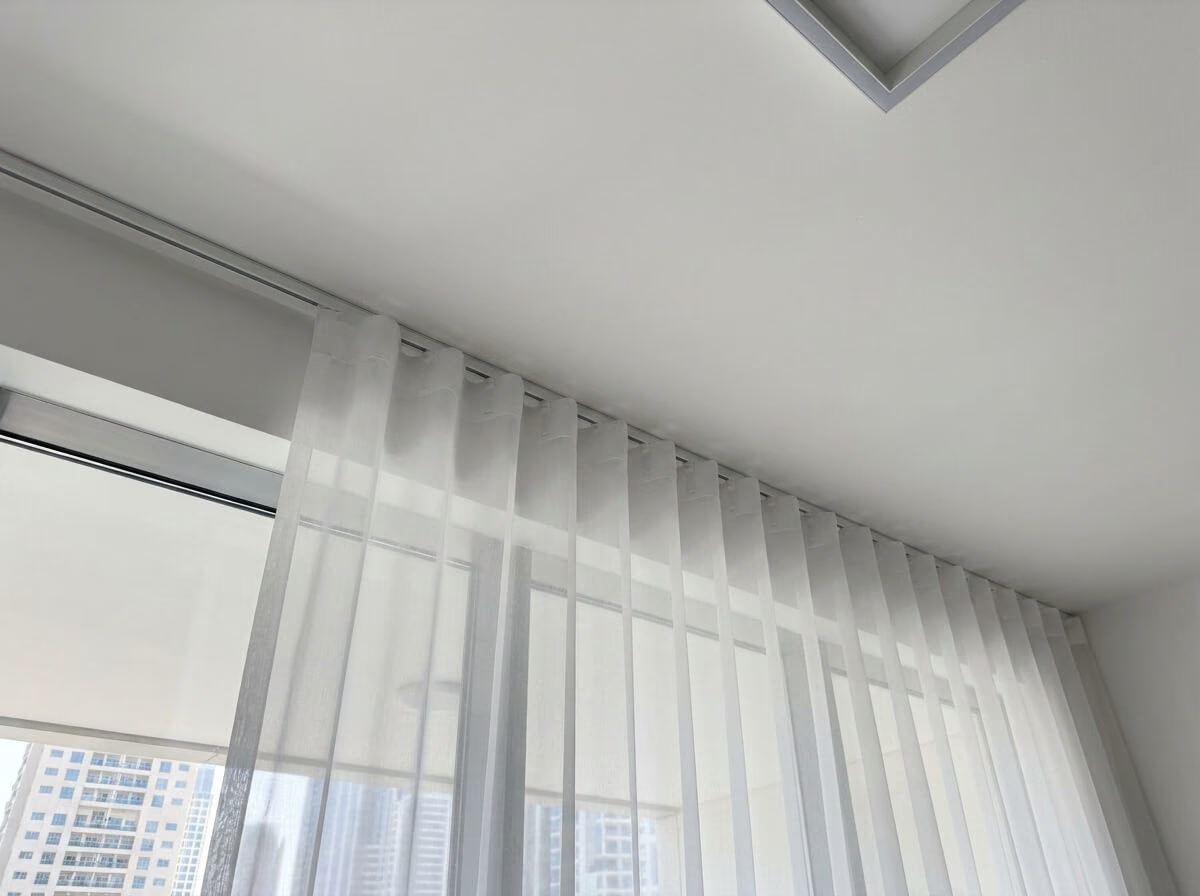
A snap tape is sewn across the top of a wave curtain, with press studs along it. Each stud clips onto a carrier, a small runner inside the track, and the carriers are held at an even spacing.
The fabric between one stud and the next swings forward, the next swings back, and the curtain settles into a continuous S-shaped fold that keeps its shape whether it is drawn or closed.
The evenness takes cloth. Ours are made at 2.5× fullness, 2.5 m of fabric for every metre of track, and fuller folds can be made on request, priced on the extra fabric.
It also takes the track. An ordinary pole with rings can't hold the spacing, so we hang every wave curtain on a white ripple fold track. If you want a pole, eyelet curtains are made for one.
Ceiling, wall or curtain pocket
Wave track is white, and it fixes wherever the window needs it.
On the ceiling
The track fixes straight to the ceiling, so the curtain falls from the top of the room and makes the glass look taller. In gypsum, the screws have to reach the framing above the board, not just the board.
On the wall
Brackets on the wall above the window hold the track out from the frame. Run past the glass on each side, the track gives the stack somewhere to stand off the window.
In a curtain pocket
Most towers here are built with a recess above the glass. One wave curtain fits it; a sheer and a blackout on a double track need a pocket 20 to 25 cm deep.
Bays and curves
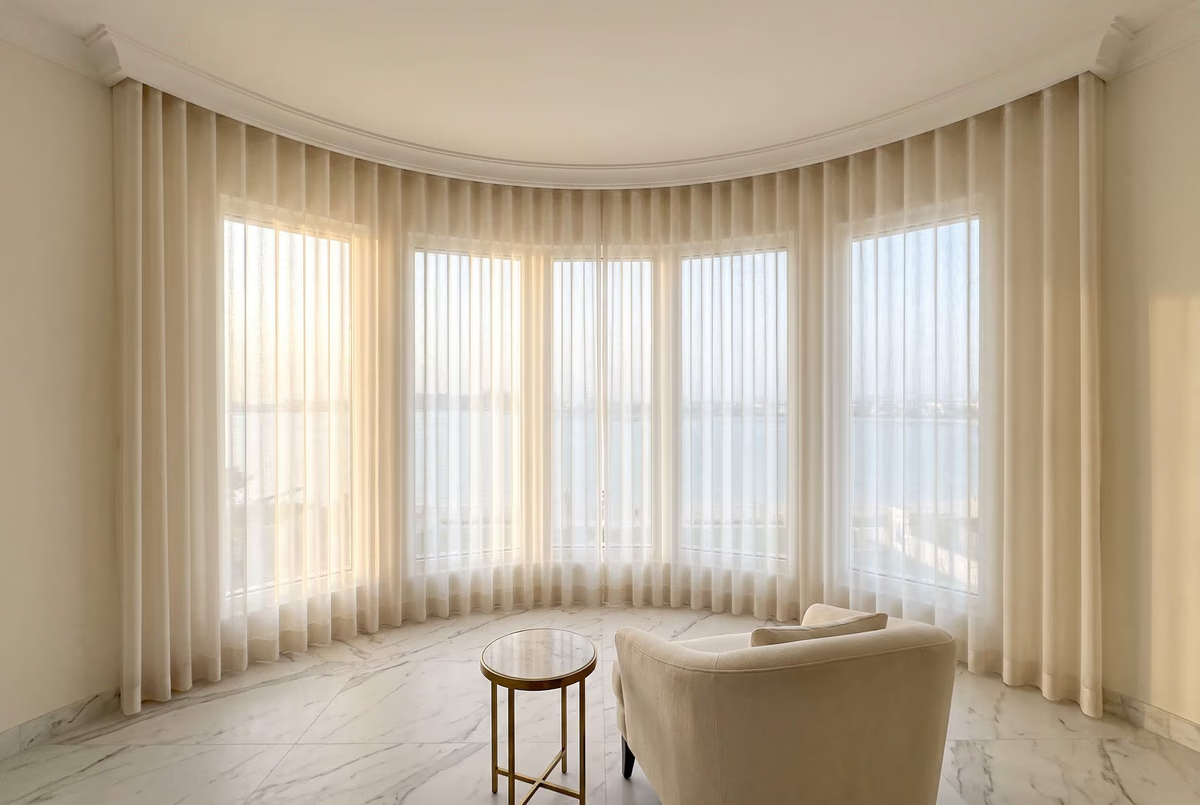
The track can be bent to follow a bay or a curved window, so the curtain follows the glass instead of cutting across the corner.
The stack
Drawn back, a wave curtain takes 18 to 25 cm for every metre of track. On a 300 cm track that is 54 to 75 cm, split between the two sides for a pair.
By hand, or a wand
Draw it by the leading edge. A wand, a slim rod hanging from the first carrier, is fitted on request, and keeps hands off the fabric.
Wave, pinch pleat or eyelet curtains?
The same fabric, hung three ways. The fabric figures are for one 200 × 300 cm window.
| Wave | Pinch pleat | Eyelet | |
|---|---|---|---|
| How it hangs | Even, continuous folds | Stitched pleats, fuller below | Deep folds from rings |
| Fullness | 2.5× | 2× | 2.5× |
| Fabric, 200 × 300 cm | 15 m² | 12 m² | 15 m² |
| Hangs from | A white track | A track | A pole |
| Motorized | Yes | Yes | No |
| Sheer and blackout | Double track, included | Double track, included | Double pole, included |
| Suits | Walls of glass, modern rooms | Bedrooms, formal rooms | Casual rooms, a pole |
Per m², all three cost the same; the wave and the eyelet use a quarter more cloth than a pinch pleat, so they cost a quarter more on the same window.
Sheer, blackout, or both on one double track
The fabric decides what a wave curtain does with the light, and a second layer lets you have both.
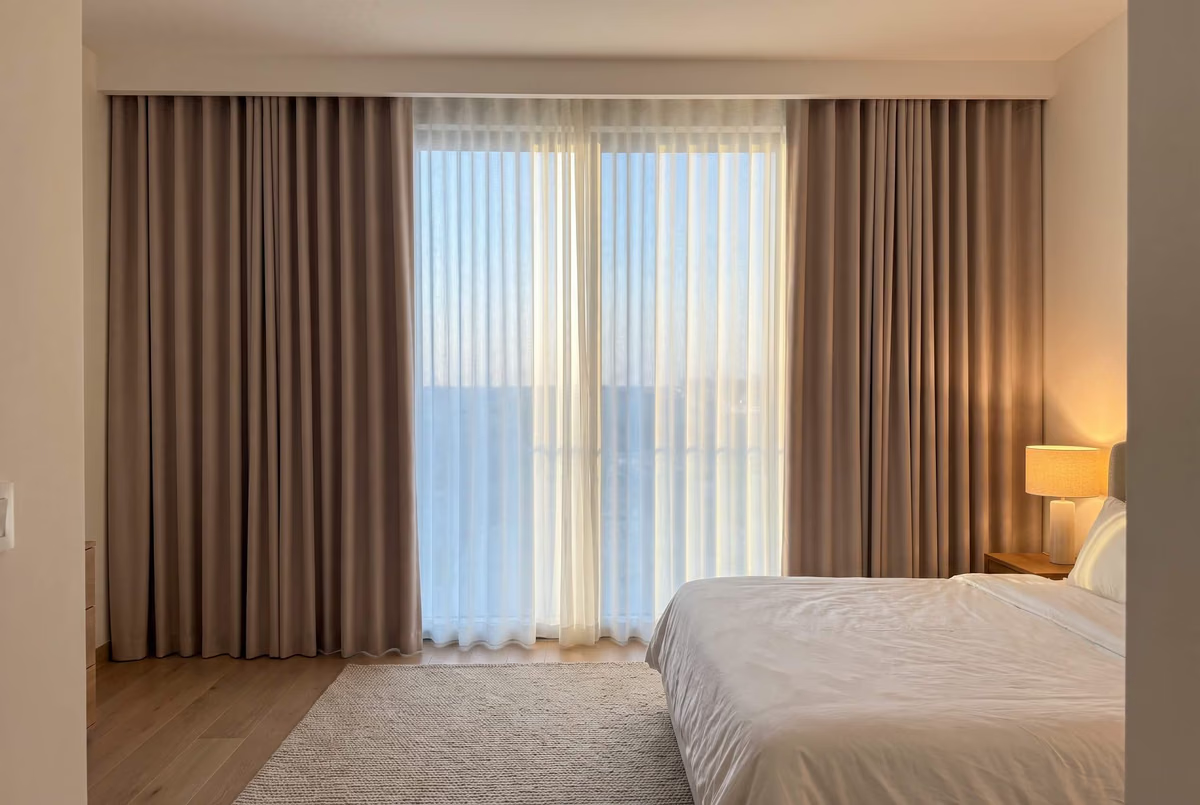
Motorized wave curtains
A wave curtain on a motorized track opens and closes from a remote, a wireless wall switch, an app or a timer. The clip is a villa bedroom we fitted.
What it costs
The curtain stays at AED 35 or AED 45 per m². The motorized ripple fold track is AED 150 per metre with Dooya or AED 200 with Somfy, and a Dooya wired motor is AED 700, fitted and programmed. The 200 × 300 cm blackout window above comes to AED 1,675 with a Dooya wired motor. Remotes, switches and hubs are extra.
Power and the pocket
A wired motor needs a power point in the curtain pocket at the motor end, best arranged before the ceiling is closed. On a double track each layer has its own motor.
Somfy or Dooya
We install both. Somfy motors carry Somfy's five-year warranty, Dooya two years, and the curtain keeps our two years. One motor pulls up to 6 m of track, and a curved motorized track is Somfy only. Motorized curtains covers the motors in full.
Book a free measuring visit
Tell us the rooms, the rough width of the glass and whether there is a recess above it. Someone brings the fabric book to you, anywhere in Dubai.
Wave curtains for Dubai's walls of glass
Where wave curtains work well in Dubai homes and offices, and how they are usually hung.
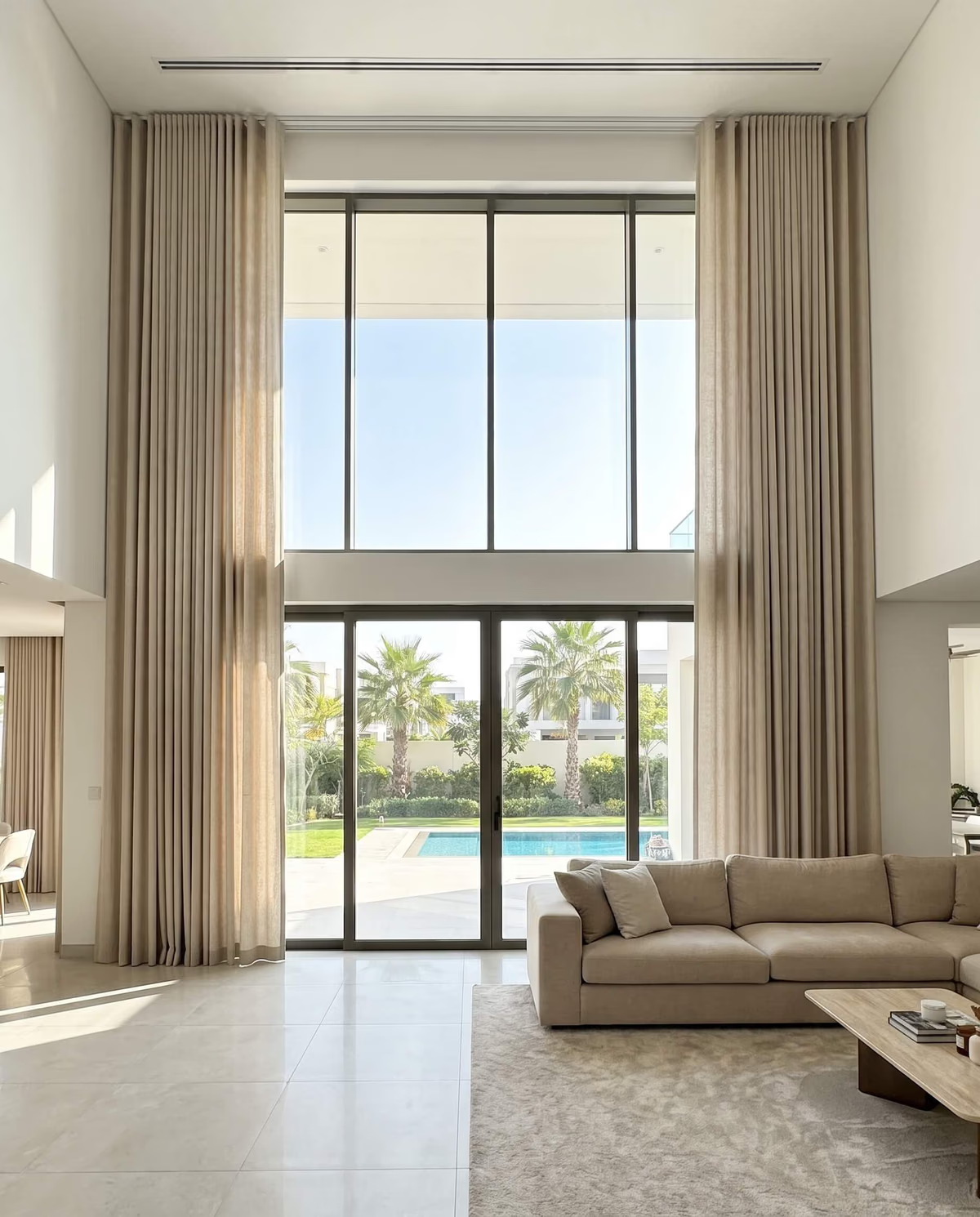
Tower living rooms
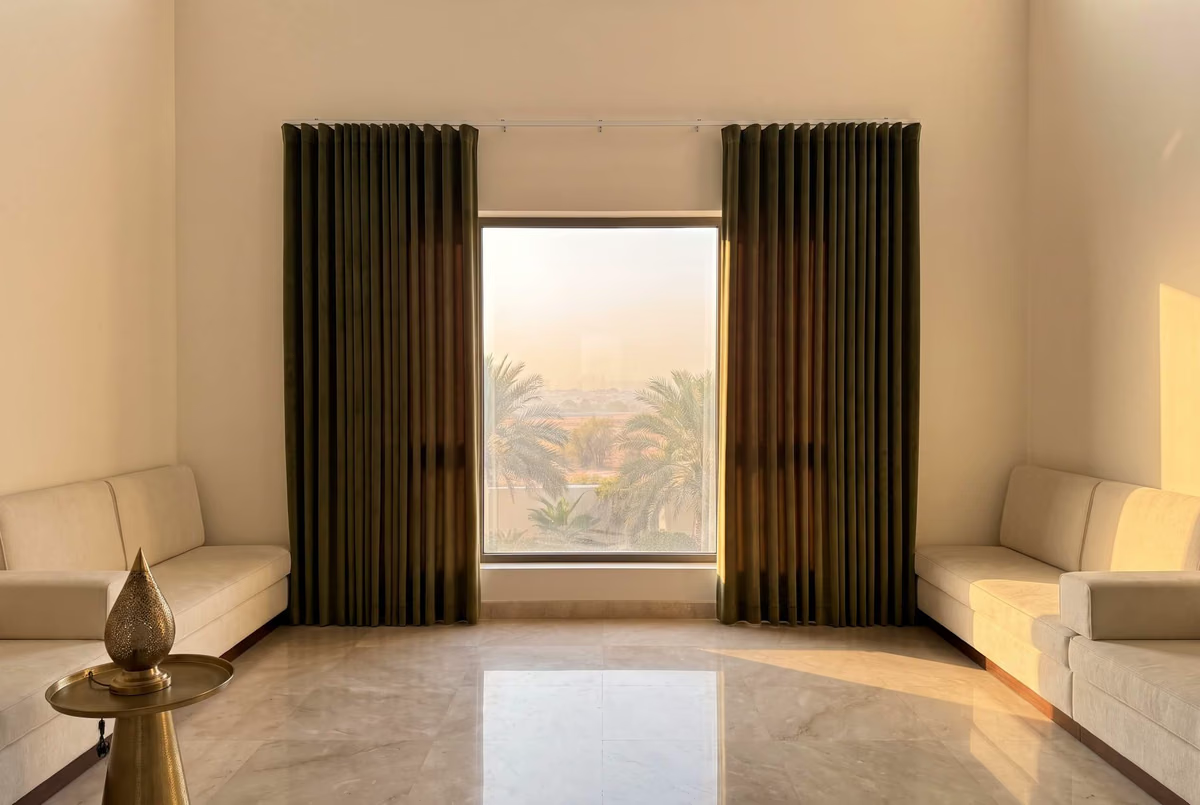
A wall of glass from floor to ceiling, usually with a curtain pocket above it. A sheer wave across the whole wall by day, with a blackout behind it on a double track if the room faces the morning sun.
Villa double height
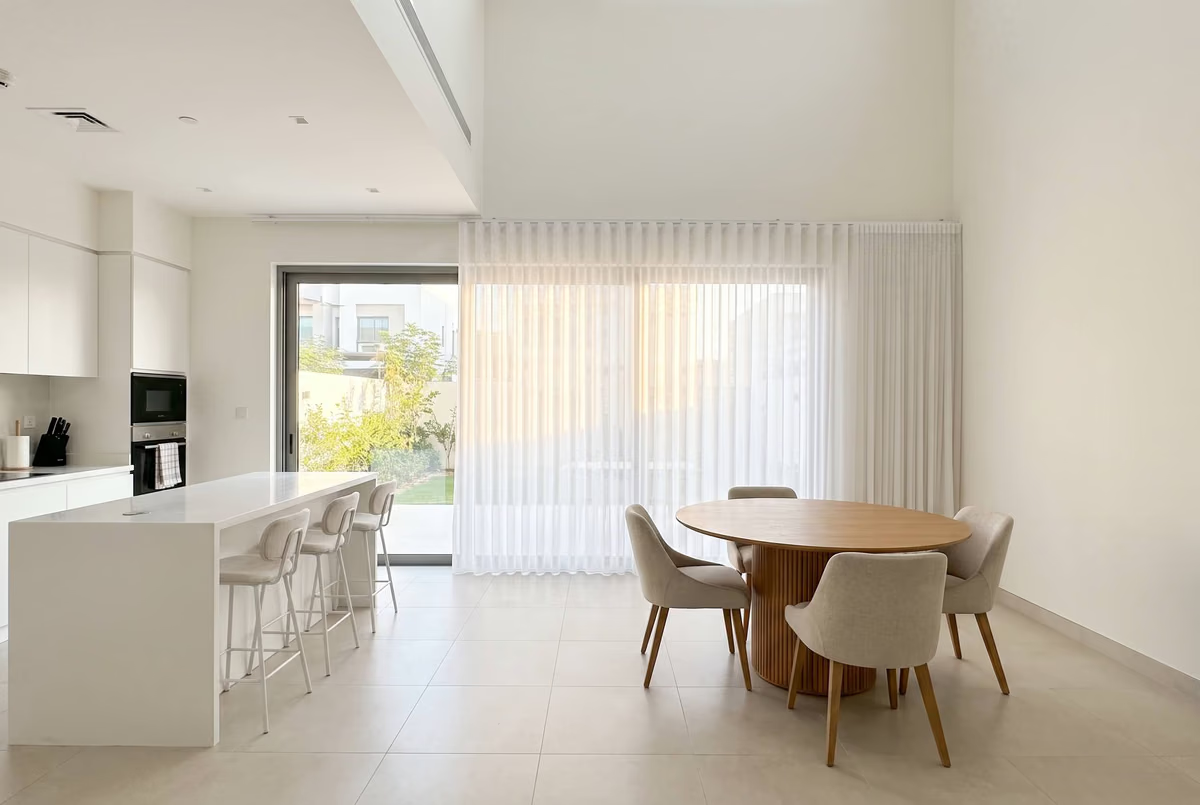
Tall drops read as one even surface in a wave heading. On glass this high a motor saves reaching the leading edge, and the track can follow a curved bay.
Bedrooms
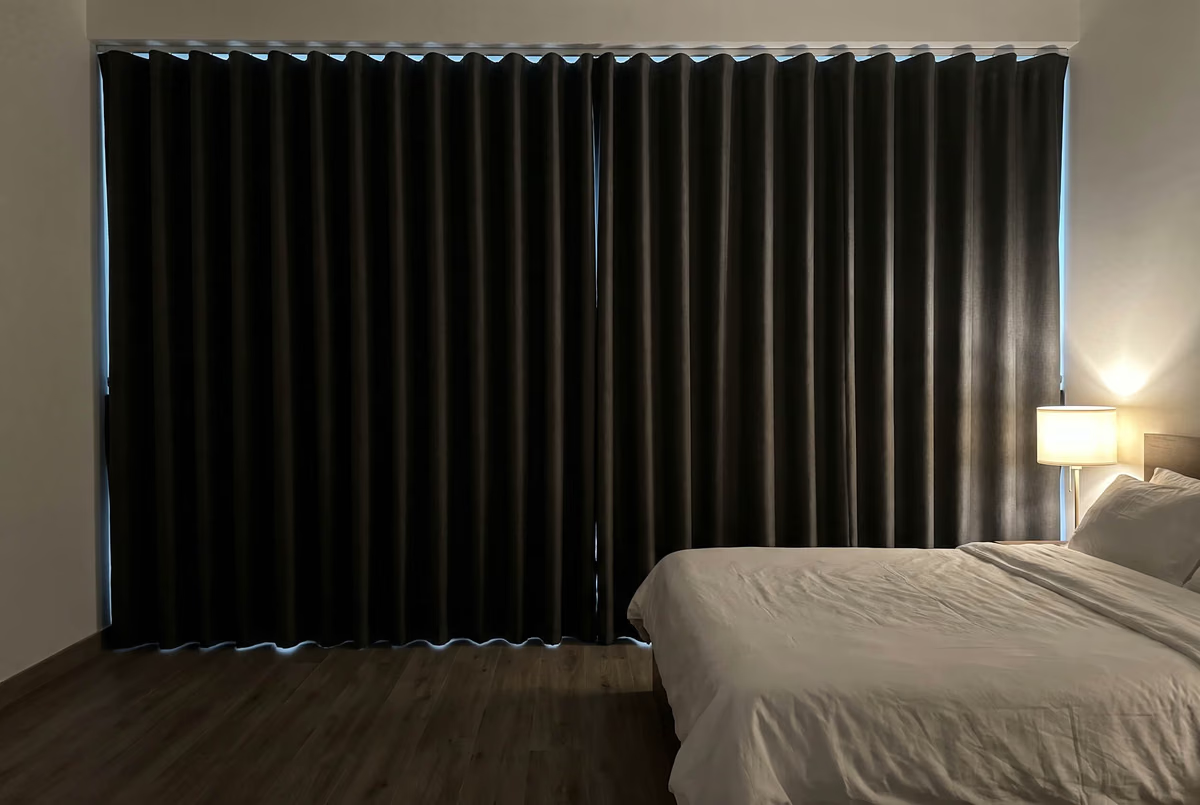
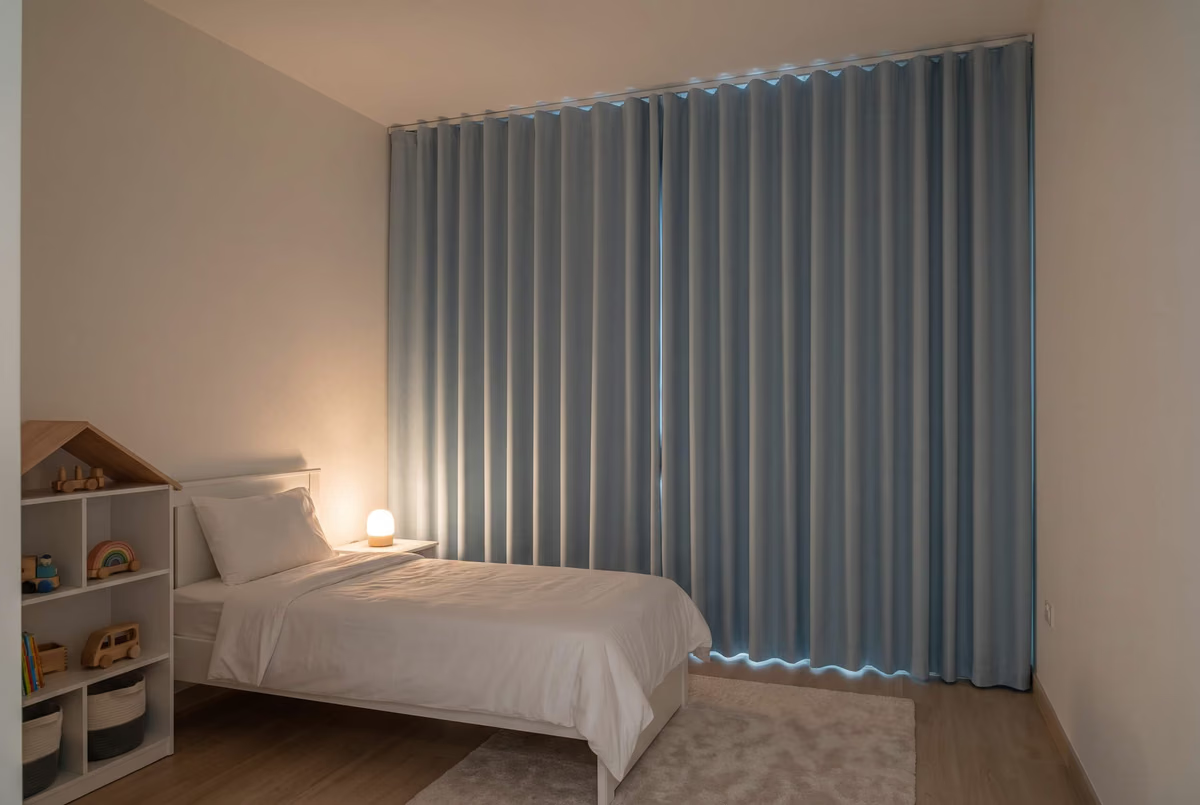
Most bedrooms here end up with two layers on a double track: a sheer for the daytime and a blackout for sleep, each drawn on its own line.
Balcony and garden doors
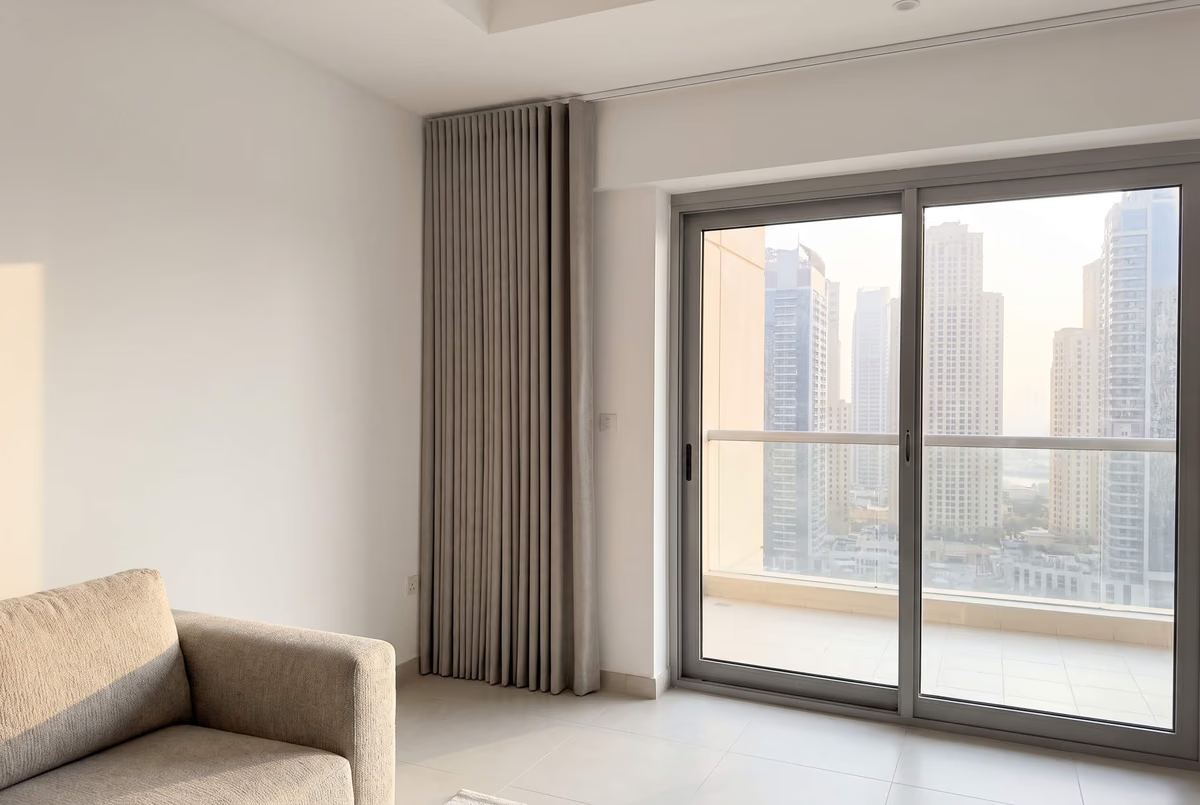
A door used all day wants the curtain fully out of the way. Run the track past the frame and the drawn-back folds stand on the wall, clear of the opening.
Offices and meeting rooms
Long runs of glazing where every window should look the same. A sheer wave takes the glare off screens and keeps the view.
Bays and corners
A bent track takes one curtain round the curve of the glass, with no gap where a straight track would cut the corner.
Wave curtains, the trade-offs
A wave heading keeps a long curtain even, and that evenness costs something in five places:
It needs its own track
A wave curtain can't hang from rings on a pole. Moving from eyelets to wave means a new track as well as new curtains.
A quarter more cloth than pinch pleat
At 2.5× fullness against 2×, a wave uses 25% more fabric, so the same window costs more: AED 525 against AED 420 in sheer for 200 × 300 cm.
A deeper pocket for two layers
A sheer and a blackout in wave need a pocket 20 to 25 cm deep; in pinch pleat, 10 to 15 cm. Measure the recess before choosing.
The stack stays
Drawn back, the folds still need somewhere to stand. Without wall beside the glass, part of the stack covers the window.
Your existing curtains
We can re-head existing curtains into wave only if they have enough fullness for it. Eyelet curtains can't be converted.
Wave curtains in a bay, a majlis and a boardroom

Questions we hear about wave curtains
How much do wave curtains cost in Dubai?
At Curtains Express they start at AED 35 per m² in sheer and AED 45 per m² in blackout, with the ripple fold track and the fitting included. Made at 2.5× fullness, a 200 × 300 cm window takes 15 m² of fabric: AED 525 in sheer, AED 675 in blackout, or AED 1,200 for both on a double track, also included.
Linen, chiffon, organza and embroidered sheers cost more, and measuring is free.
What are wave curtains?
Curtains that hang in even, continuous S-shaped folds. A snap tape across the top clips onto carriers spaced along a track, and the fabric between them swings forward and back. Wave, ripple fold and S-fold are names for the same heading.
Are wave curtains better than pinch pleat?
Neither is better; they look different. A wave is softer and more modern, and its folds stay even across the width. A pinch pleat is more tailored and uses less cloth: a 200 × 300 cm window is AED 420 in sheer pinch pleat against AED 525 in wave. Both can be motorized and both run on a track.
Are wave curtains worth it?
On a wide wall of glass, yes: the folds stay even however far the curtain runs, and it draws back into a neat stack. On a single small window, a pinch pleat or an eyelet does the job with less cloth.
Can wave curtains go on a pole?
Not ours. The even fold comes from carriers spaced along a track, which a pole with rings can't hold, so we hang wave curtains on a white ripple fold track. For a pole, choose eyelet curtains.
What fullness do wave curtains need?
Ours are made at 2.5×: 2.5 m of fabric for every metre of track. Fuller folds are made on request and priced on the extra fabric.
Should wave curtains touch the floor?
That is your choice, and it is settled at the measuring visit. Just clear of the floor, the hem stays clean and the folds hang straight; touching, it hides the gap underneath; puddled, it looks softer but gathers dust.
Can wave curtains be motorized?
Yes, with Somfy or Dooya. The motorized ripple fold track is AED 150 per metre with Dooya or AED 200 with Somfy, plus the motor, from AED 700 for a Dooya wired motor. A wired motor needs a power point in the curtain pocket.
Can I have sheer and blackout wave curtains together?
Yes. They share a double track, included in the price: AED 1,200 for a 200 × 300 cm window. Two layers need a curtain pocket 20 to 25 cm deep, and each draws on its own.
How much space do wave curtains take when open?
Drawn back, a wave curtain takes 18 to 25 cm for every metre of track: 54 to 75 cm on a 300 cm track, split between the two sides for a pair.
Can you change my existing curtains to wave?
Only if they have enough fullness for a wave heading, which is made at 2.5×. Eyelet curtains can't be converted.
How soon can wave curtains be fitted?
Usually about a week from your go-ahead to fitted curtains, after a free measuring visit. Every pair carries a two-year warranty on stitching and fitting; a Somfy motor carries Somfy's own five years and a Dooya motor two.
Get a figure for your window
Send a photo of the window with its rough width and height, and say whether there is a recess above it. We will come back with the fabric, the track and a figure.