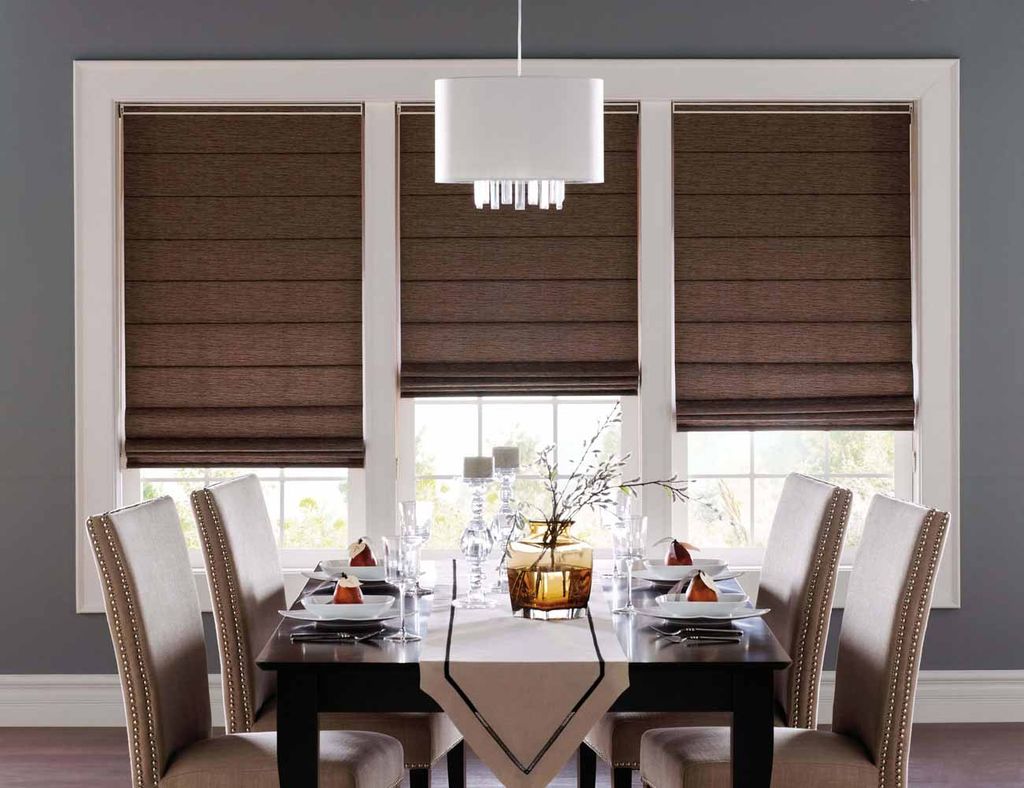
Roman blinds, made to measure in Dubai
A roman blind is curtain fabric that lifts into flat horizontal folds instead of gathering sideways. Down, it reads as a single panel of cloth across the window. Up, it stacks into pleats at the head.
It's the blind for rooms where a roller looks too plain and a curtain takes too much wall — a bedroom window sitting between two wardrobes, a study, a window over a run of kitchen units.
Curtain cloth, blind footprint
Made from the same fabrics as a curtain, so linens and weaves are on the table, but it clears the wall on either side of the window.
Lined to suit the room
Unlined, dimout or blackout lining behind the face fabric. The lining does the light control; the front cloth does the look.
Free measuring visit
The fabric range comes to you, so you can hold a cloth against your own window, in your own light, before anything is cut.
Where a roman works, and where it doesn't
Raised, a roman keeps its fabric at the top of the window. That stack has real depth — the heavier the lining, the deeper it sits — and on a short window it can cover a noticeable share of the glass. On a tall window it barely registers. It's the first thing to look at when deciding whether the blind goes inside the opening or above it.
Width is the other limit. A roman lifts its full width in one movement, so a very wide blind gets heavy and starts to pull unevenly. Past a certain span it works better as two blinds side by side than as one that fights you every morning.
And it is a fabric blind. In a kitchen it sits in the cooking, and in a bathroom it sits in the steam, which is where an aluminium venetian or a wipeable roller earns its place instead.
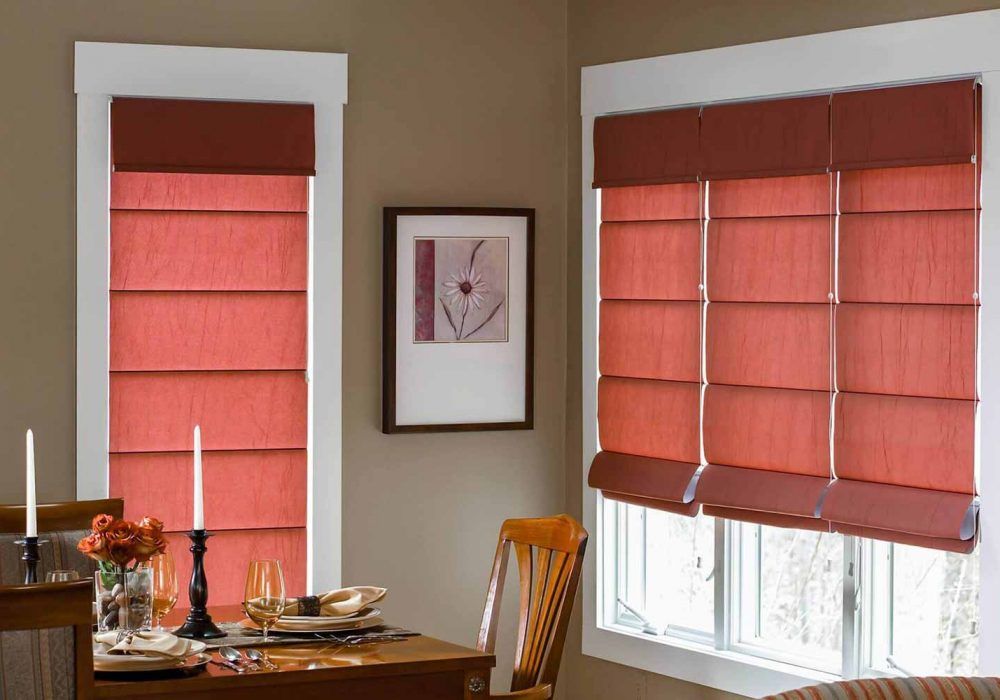
Book a free measuring visit
Tell us your area and roughly how many windows, and we'll bring the fabric range to your home or office.
The lining is what darkens the room
The face fabric is chosen by eye. The lining behind it decides how the room behaves.
An unlined roman filters daylight the way a sheer does — pleasant in a study, no use at all for sleeping. A dimout lining takes the light well down and gives the blind enough body that the folds sit square instead of sagging. A blackout lining stops light coming through the cloth.
Even lined, a roman fitted inside the reveal leaves a line of light down each side, because the blind has to be cut narrower than the opening to run freely. In an east-facing bedroom that line arrives at sunrise. The fix is the same one that works for curtains: hang the blind in front of the opening so it overlaps the frame, or put a curtain over it.
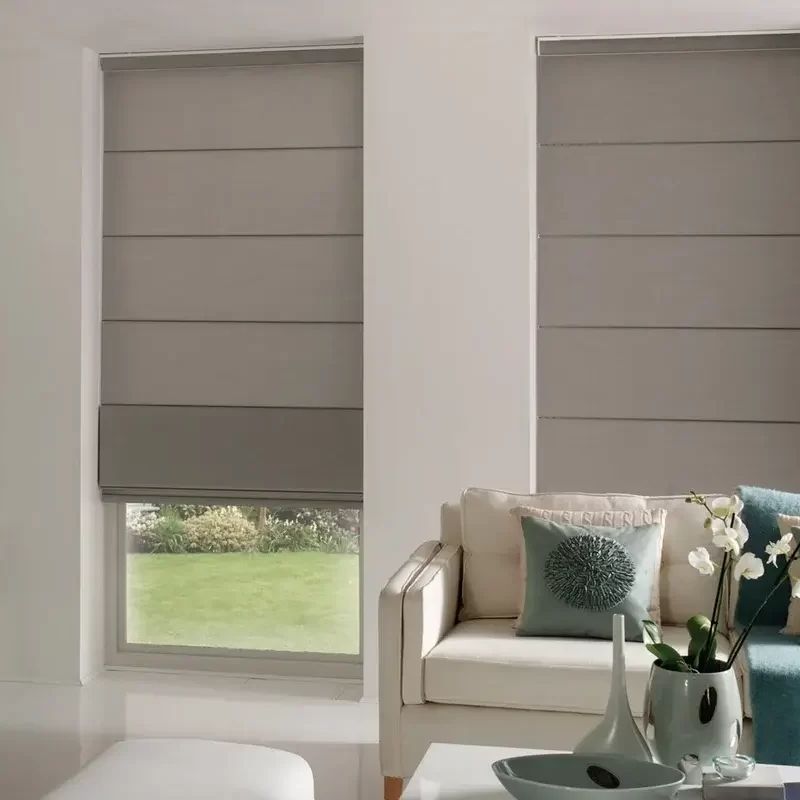
Roman blinds against venetian blinds
They answer different questions. A venetian tilts: the slats stay closed across the glass while daylight comes in at an angle, so privacy and light aren't a trade. A roman is either up or down. It's cloth, and cloth doesn't tilt.
What the roman gives back is softness. It's the one blind that reads like a curtain, so it sits comfortably in a bedroom or a living room where a run of slats would make the room look like an office.
They're not really rivals — a lot of homes end up with both. Venetians in the kitchen and bathroom, where heat and damp rule fabric out; romans in the bedrooms, where the room has to go dark and look like somewhere you sleep.
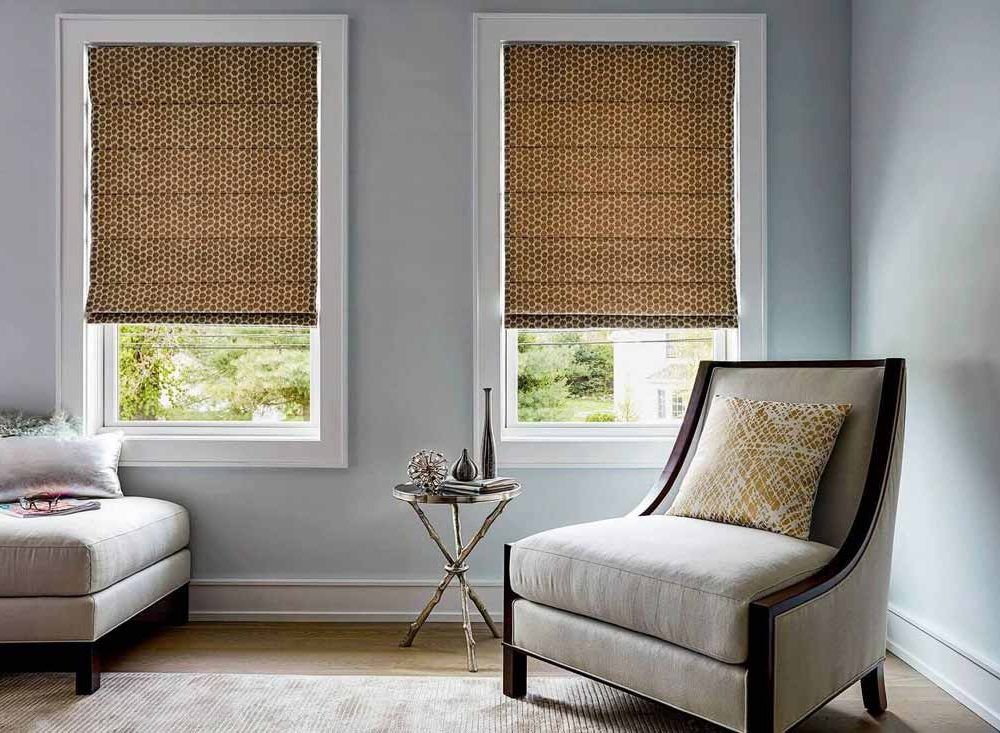
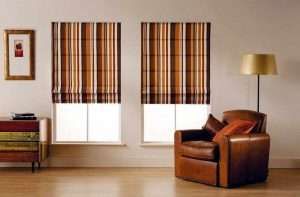
Roman blinds in use
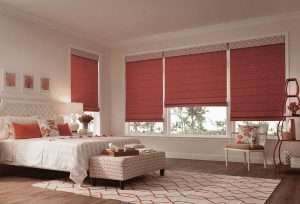

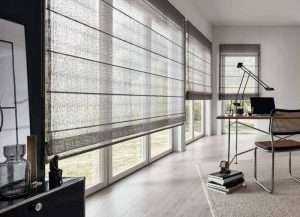
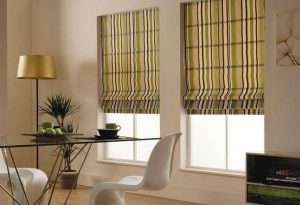
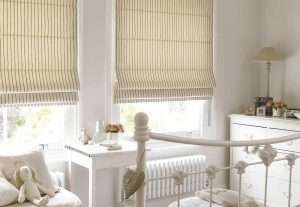

What to settle before ordering
These come up on the measuring visit, and each one changes what gets made:
- Inside the reveal or in front of it, which decides how much light gets past the edges.
- Lining — unlined, dimout or blackout — chosen by what the room is for.
- One blind or two across a wide window, so the lift stays even and the folds stay square.
- Where the blind sits when it's raised, since the stack covers glass unless there's wall above the opening to take it.
- Cord, chain or motor, and which side it runs, so it doesn't land behind a door.
- Whether a sheer or a curtain goes over it, which changes the fixing above the window as much as it changes the blind.
None of it is difficult. All of it is easier to decide before the fabric is cut.
Get a quote for your windows
Call or WhatsApp us and we'll arrange a time to measure up and price the job before anything is cut.