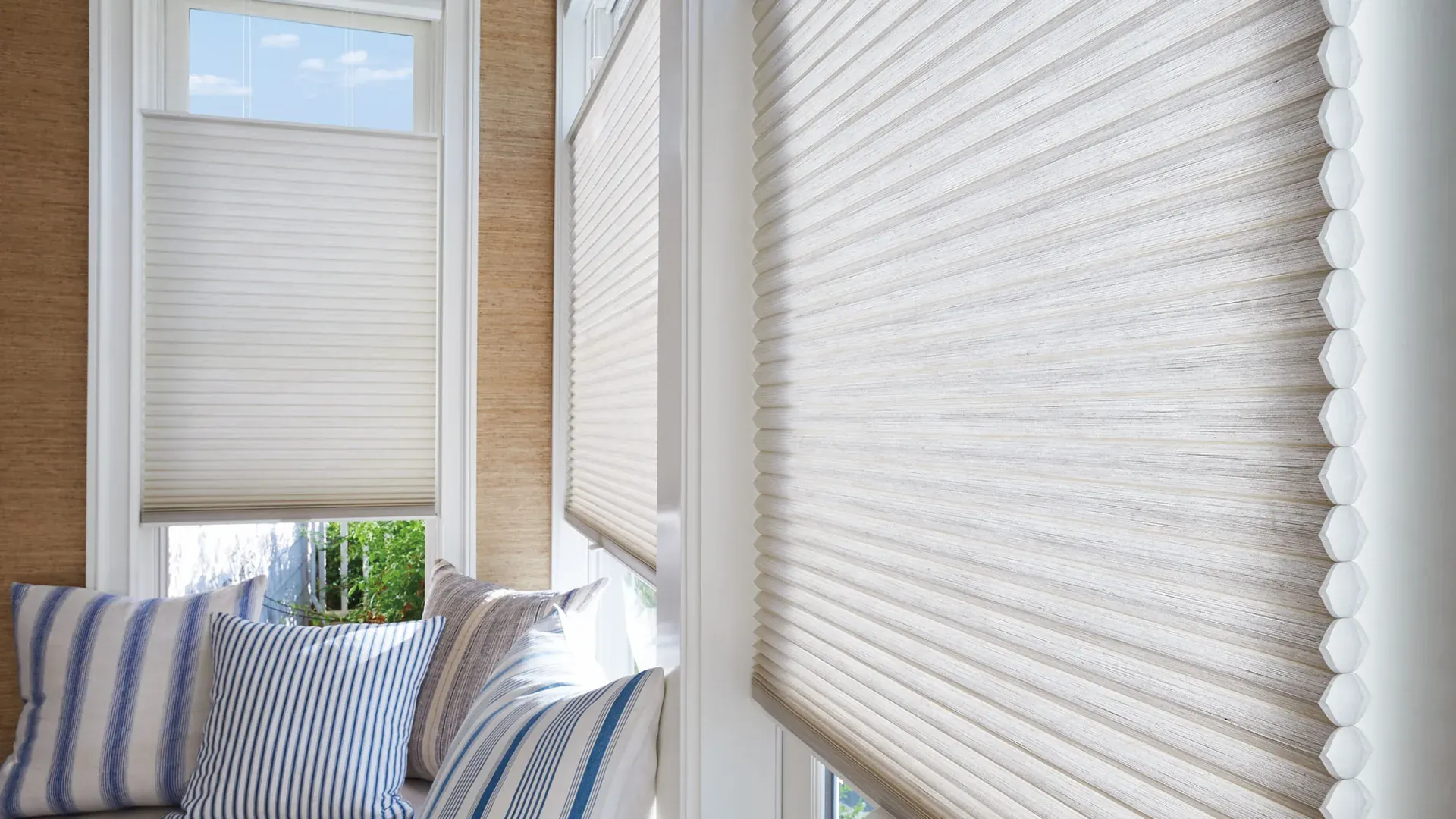
Honeycomb blinds in Dubai, also called cellular blinds
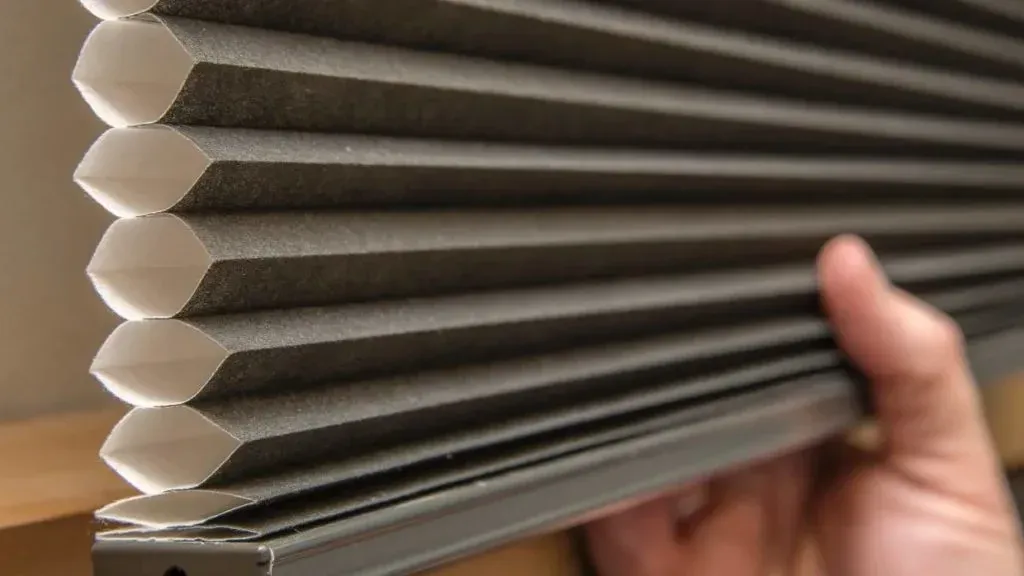
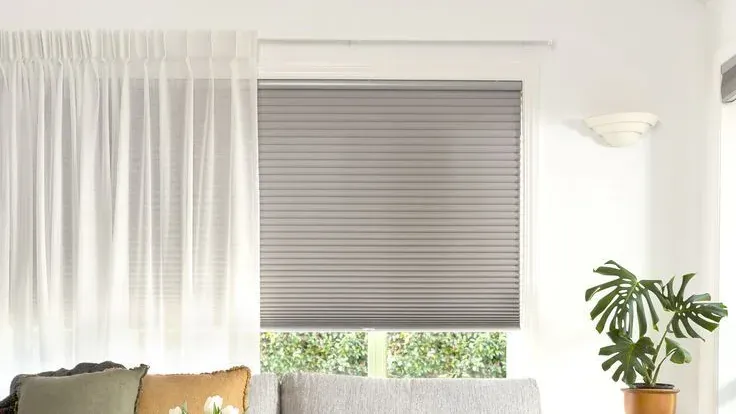
A honeycomb blind is a strip of pleated fabric bonded into rows of hollow cells. Seen end-on the cells look like a honeycomb, which is where the name comes from, and each one holds a pocket of still air between the room and the glass.
That trapped air is the whole point. Air that isn't moving conducts heat poorly, so the cell slows heat crossing the window rather than only blocking the light. It is the one common blind that does insulating work as well as shading work.
In a city where the glass is the hottest surface in the room for five months of the year, that matters more here than almost anywhere else it's sold.
The samples come to you
There's no walk-in counter. Someone brings the fabric range to your home or office on a free measuring visit, so you see the cell sizes and the colours against your own light.
Made to the opening
Cut and made to the measurements taken at your window, not trimmed down from a stock width. A cellular blind only insulates properly if it fits the reveal closely.
Fitted, then looked after
We fit what we make, and handle alterations, repairs and cleaning afterwards.
How the cell works
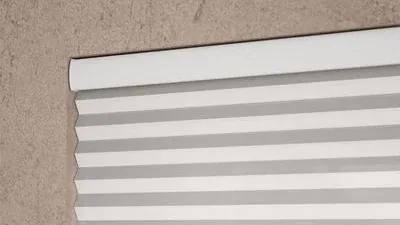
Two sheets of pleated fabric are bonded back to back so the pleats form a continuous row of tubes running the width of the blind. Raise it and the cells collapse flat into a small stack at the head; lower it and they open into their six-sided section.
The cloth is a spun, non-woven polyester, which is what lets a cell hold its shape without a rod or a batten inside it. There is no slat, no ladder tape and no cord on the face, so a honeycomb blind reads as one continuous surface — quieter on a window than a venetian or a vertical.
Single cell is one row of tubes. Lighter, slimmer when stacked, and the usual choice where the blind is mostly doing light control.
Double cell is two rows bonded front to back, so there are two separate pockets of air in series instead of one. It stacks a little deeper and costs more, and it's the one to specify on glass that takes direct afternoon sun.
Cell sizes generally run from around 15 mm up to 45 mm across. A larger cell holds more air and suits a tall window; a smaller cell gives a finer pleat and a neater stack on a short one. We bring both to the measuring visit rather than deciding it for you.
What the cells do in a Dubai summer
Between May and September the outer face of a window here spends the afternoon well above 40°C, and a west-facing pane in a tower runs hotter still. Whatever heat passes through that glass, your air conditioning has to take back out again.
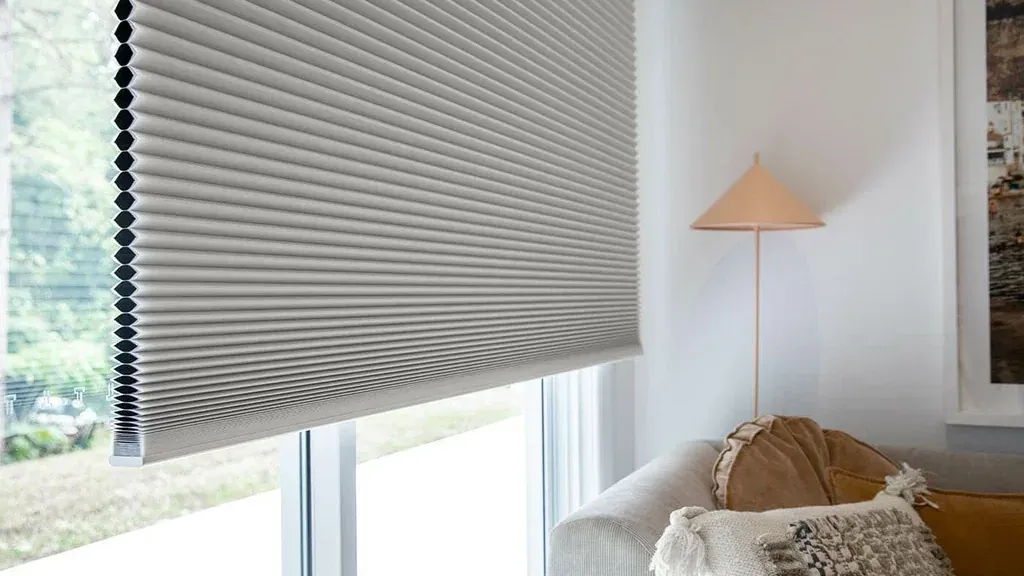
A roller blind or a curtain intercepts the light. A honeycomb blind does that too, but the cell also puts a layer of still air in the path of the heat, so less of it reaches the room to begin with. Fitted close to the reveal, the blind and the glass hold a buffer between them that the room's air never really mixes with.
How much difference it makes depends on things we can see at your window and can't guess from here: which way it faces, whether the glass is single or double glazed, how deep the reveal is, and whether the blind can sit inside it or has to hang outside. Fabric makers publish insulation figures for their own cloth and we'll show you the ones for whatever you're choosing — that's more use to you than a percentage lifted off somebody's homepage.
The same property works both ways and in both seasons: it slows heat coming in through the afternoon, and on a cool January night it slows heat leaving. It damps sound a little too, for the same reason — still air in a closed cell is a poor path for noise. Not soundproofing, but noticeable on a road-facing window.
Book a free measuring visit
Tell us your area and roughly how many windows, and we'll bring the fabric range to you.
Light: filtering, dim-out and blackout
The cloth comes in three broad grades, and the words get used loosely by everyone selling them, so it's worth being precise about which is which.
Light filtering passes a soft, even daylight and gives full daytime privacy — you can't see through it, but the room stays lit. This is what most people picture, and what most living rooms get.
Dim-out has a denser weave or a light backing. It takes the room down a long way without going properly dark.
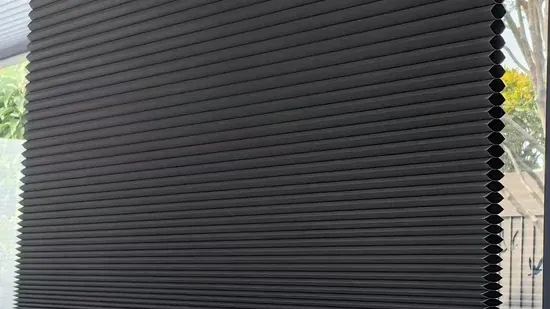
Blackout honeycomb carries a foil or an opaque liner inside the cell, so the fabric itself passes no light at all.
Here is the part most sites selling these leave out. Blackout fabric does not by itself make a blackout window. A blind hangs on brackets with a few millimetres of air either side, and light comes around that gap whatever the cloth does. If a room genuinely has to go dark — a bedroom on an east elevation, a nursery, a room someone sleeps in during the day — the blind needs side channels: aluminium tracks fixed to the reveal that the blind's edges run inside.
With channels, a blackout honeycomb is among the better ways to darken a room, because the same cell is killing the heat at the same time. Without them, expect a well-dimmed room rather than a dark one. If darkness is the requirement, say so at the measuring visit — it changes the fitting, not just the fabric. Blackout blinds and blackout curtains are the alternatives worth putting beside it.
Top down, bottom up
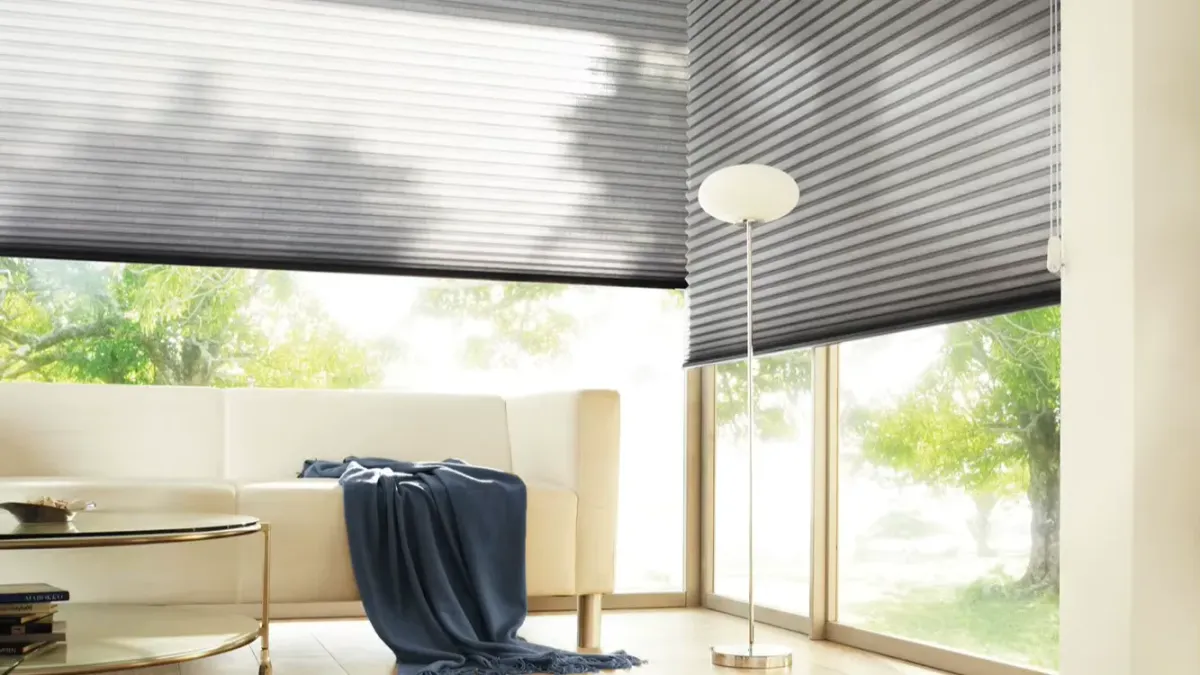
A honeycomb blind can be built to move from either end. The bottom rail rises the way any blind does, and the head rail can also be drawn down from the top — so the blind sits as a band across the middle of the window with clear glass above and below it, or covers only the lower half.
It solves one problem very well. On a ground-floor window facing a walkway, or a villa window onto a shared garden, you can cover the lower two thirds for privacy and leave the top third open for daylight and a view of the sky. Nobody passing sees in, and the room doesn't lose its light.
It costs more than a standard build and adds a second control, so it's worth specifying on the windows that actually need it rather than across a whole flat.
Where they suit a Dubai home, and where they don't
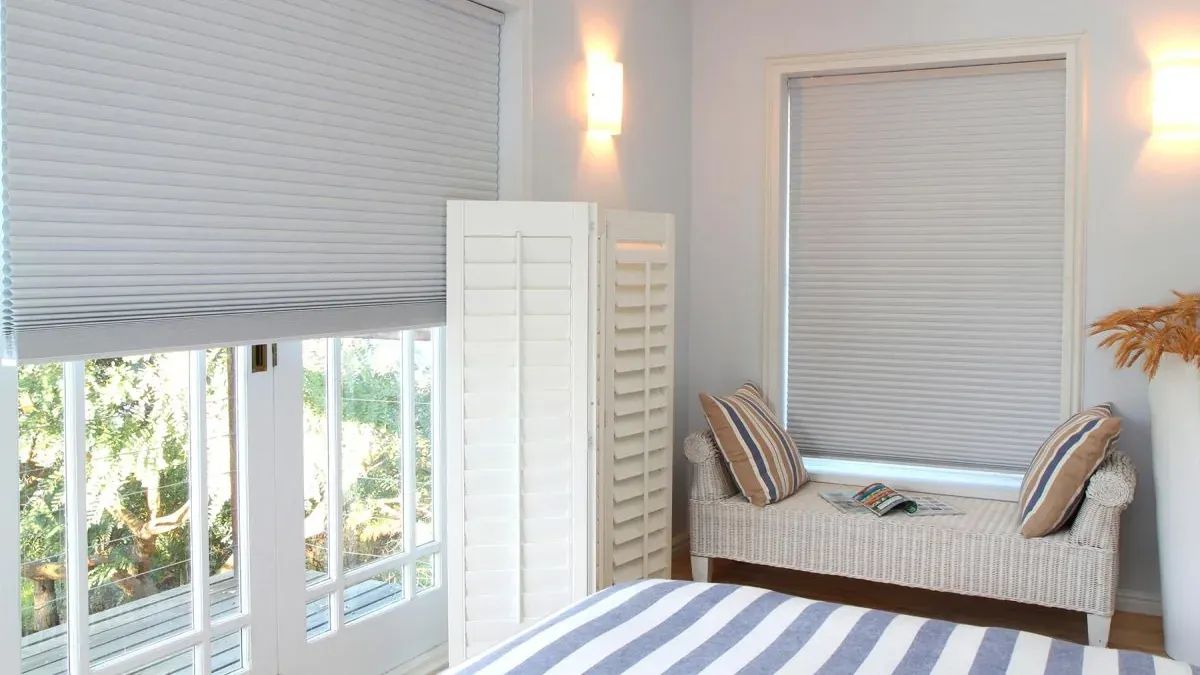
They suit bedrooms, living rooms, home offices, and any west- or south-facing glass where afternoon heat is the complaint. They suit tall tower windows, where the stack collapses to a slim bundle and leaves the view clear. They work on sliding balcony doors, either as one wide blind or as a vertical cellular system that draws sideways like a curtain — same cell, different mechanism.
They are the wrong choice in a bathroom or directly over a kitchen hob. The cells are open at both ends, and steam, cooking grease and airborne oil settle inside them where nothing can reach. A roller blind wipes clean; a honeycomb cell doesn't.
Be careful too with a blind mounted tight against glass that runs cold under an air-conditioning vent. Any trapped-air system can hold condensation against a cool surface, and the inside of a cell is a poor place for moisture to sit.
On very wide runs a single blind gets heavy and the stack gets deep. We'd usually split a wide opening into two or three blinds on one head rail, or suggest a duplex blind where the priority is the view rather than the insulation.
The part nobody mentions
Dust. The air here carries fine sand for much of the year, and an open-ended cell is a good place for it to settle. A closed blind is largely protected; one left half-raised for weeks is not. The honest maintenance answer is a vacuum with a brush head along the face every few weeks, and a hairdryer on its cool setting blown through the cells once or twice a year to clear them out.
They don't wet-wash. You can spot-clean the face, but a cell that gets soaked loses its crispness and can mark as it dries. Anything worse than a surface mark is a job for us rather than for a bucket.
Creasing is permanent. The pleats are set when the blind is made, and a cell folded the wrong way — usually in transit, or by someone pulling the blind sideways — keeps the fold. It's a good argument for letting the people who made it fit it.
And the standard build has a cord. Where there are small children or pets in the room, ask for a cordless build or a motorized one; the motor removes the loop entirely and is the sensible answer on a high window in any case. Power has to be planned before installation, so raise it early.
Honeycomb blinds, in short
- Pleated fabric bonded into hollow cells; the still air inside the cell is what slows heat crossing the glass.
- The only common blind that insulates as well as shades — the reason it earns its place in a Dubai summer.
- Single cell for light control; double cell where the glass takes direct afternoon sun.
- Three fabric grades: light filtering, dim-out and blackout.
- Blackout cloth still needs side channels to make a genuinely dark room. The fabric alone will not do it.
- Can be built top-down/bottom-up: privacy across the lower half, daylight above it.
- Collapses to a slim stack, so it leaves the view and the reveal clear.
- Not for bathrooms or above a hob — the cells trap steam and grease.
- Vacuum the face, blow the cells through occasionally, don't wet-wash.
- Cordless and motorized builds available; specify early, because the power has to be planned.
Tell us which way the window faces, what's outside it and whether the room has to go dark, and we'll say at the visit whether this is the right thing for it — or whether something else in the blinds range does the job better.
Honeycomb blinds: common questions
Do honeycomb blinds actually keep heat out?
Yes, and by a different mechanism from other blinds. A roller or a curtain blocks the light; a honeycomb blind does that and also puts a pocket of still air between the room and the glass, and still air is a poor conductor of heat. Fitted close to the reveal so the buffer isn't bypassed, it slows the heat crossing the window rather than just shading it.
How much you gain depends on which way the window faces, whether the glazing is single or double, and whether the blind sits inside the reveal or outside it. We look at all three at the measuring visit.
Are honeycomb blinds blackout?
The fabric can be. Blackout honeycomb has a foil or opaque liner inside the cell and passes no light itself. But a blind hangs with a few millimetres of clearance either side, and light comes around that gap regardless of the cloth.
For a genuinely dark room you need blackout fabric plus side channels — aluminium tracks fixed to the reveal that the blind's edges run inside. Without them you get a well-dimmed room, not a dark one.
How much do honeycomb blinds cost in Dubai?
It depends on the size of the window and on four choices: single or double cell, the fabric grade (light filtering, dim-out or blackout), whether you want side channels or a top-down/bottom-up build, and whether it's corded, cordless or motorized.
We don't publish a price per square metre, because a number that ignores those choices isn't really a quote. Send us the rough size of the windows and what the room needs and we'll give you a real figure. Measuring is free.
Single cell or double cell?
Single cell where the blind is mainly there for light and privacy — it's lighter and stacks slimmer. Double cell where the glass takes direct afternoon sun, because two pockets of air in series slow the heat more than one. Double stacks a little deeper and costs more.
On a west-facing window in Dubai, double cell is usually worth the difference.
How do you clean honeycomb blinds?
Vacuum along the face with a brush head every few weeks, and once or twice a year blow through the cells with a hairdryer on its cool setting to clear out settled dust. Spot-clean marks on the face gently.
Don't wet-wash them. A soaked cell loses its crispness and can mark as it dries. Anything worse than a surface mark, call us — we clean and repair what we've fitted.
Honeycomb blinds or roller blinds?
Choose honeycomb when heat is the problem: it insulates as well as shades, and no roller does that. Choose a roller blind when the room is humid or greasy — a bathroom, or a window above a hob — because a roller wipes clean and an open-ended cell can't be got at.
A roller is also the cheaper option on a straightforward window where you only want light control.
Can honeycomb blinds go on a sliding balcony door?
Yes, two ways. A single wide blind that lifts, where the door is used occasionally — or a vertical cellular system that draws sideways like a curtain, which is the better answer on a door in daily use, because you're not raising the whole blind every time you step out.
Same cell either way, different mechanism. Which one suits depends on the door width and how often it's opened.
Can honeycomb blinds be motorized?
Yes, and it's the sensible choice on a high window, a wide run, or anywhere small children or pets make a hanging cord a concern. A motor removes the loop entirely and runs from a remote or a wall switch. See motorized blinds.
The power supply has to be planned before installation, so mention it at the measuring visit rather than afterwards.
Are honeycomb blinds worth it?
On glass that takes real sun, yes — they do a job no other blind does, and the air conditioning runs against a smaller load for it. On a shaded north-facing window where you only want privacy, a cheaper blind will do the same work.
They're also the wrong product for a bathroom or a kitchen hob window at any price. We'd rather tell you that at the visit than sell you one.
Talk to us about the window
Call or WhatsApp +971 50 280 8765, or ask for a measuring visit and we'll bring the fabric range to you.